

The Obsolete Matters
Digital Art Reflecting on Itself
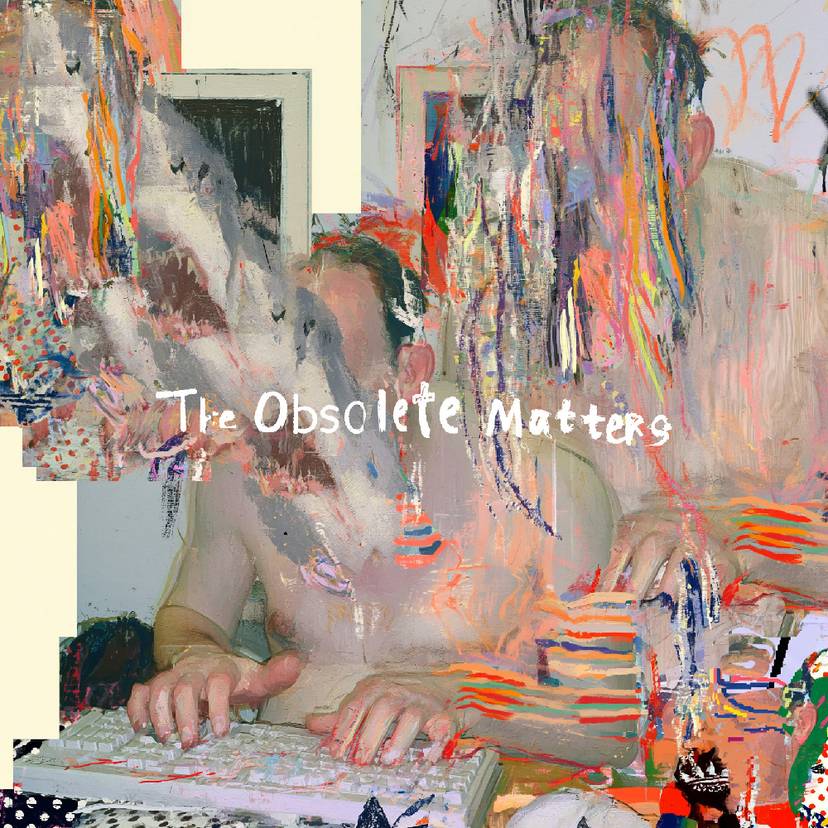
Curated by grebenshi and Ilya Bliznets
25 August – 1 September 2026
Digital art is sixty years old, and it has had three ages.
It began technical: plotters, mainframes, instructions that produce an image nobody drew. In the nineties it became general — the network made work that happens between people, and software made the digital the default tool for everything the physical arts were already doing. In the twenties the chain made it personal, tying a work to a name, a wallet, a collector at the other end.
All three are still running at once, which is what a mature practice looks like from the inside: not a line of progress but a field deep enough to hold its own contradictions. Ilya Bliznets, who is in this show, puts the position exactly — the digital long ago stopped seeming new to him, and still does not feel understood or exhausted.

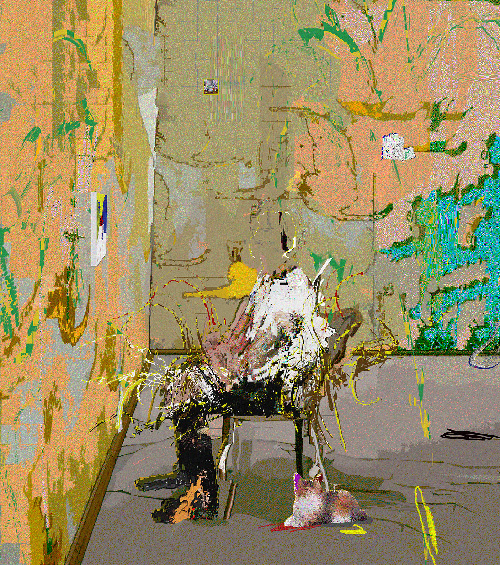
@yuma_sogo — Flowers in the Walls
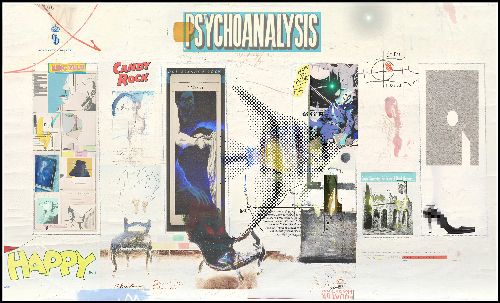
@ilyabliznets — Analysis of the work
That field is now mainstream. Art Basel brought Zero10, its sector for digital, code-based and AI work, to Basel in June 2026 under the title The Condition, with a presentation devoted to Vera Molnar, a pioneer of computer drawing from its earliest days. Dataland opens this year as the first permanent museum for generative and AI art. Museums are acquiring. This is what canonisation looks like while it is happening.
Though it's not the arrival to be the interesting part. What arrives with it is.
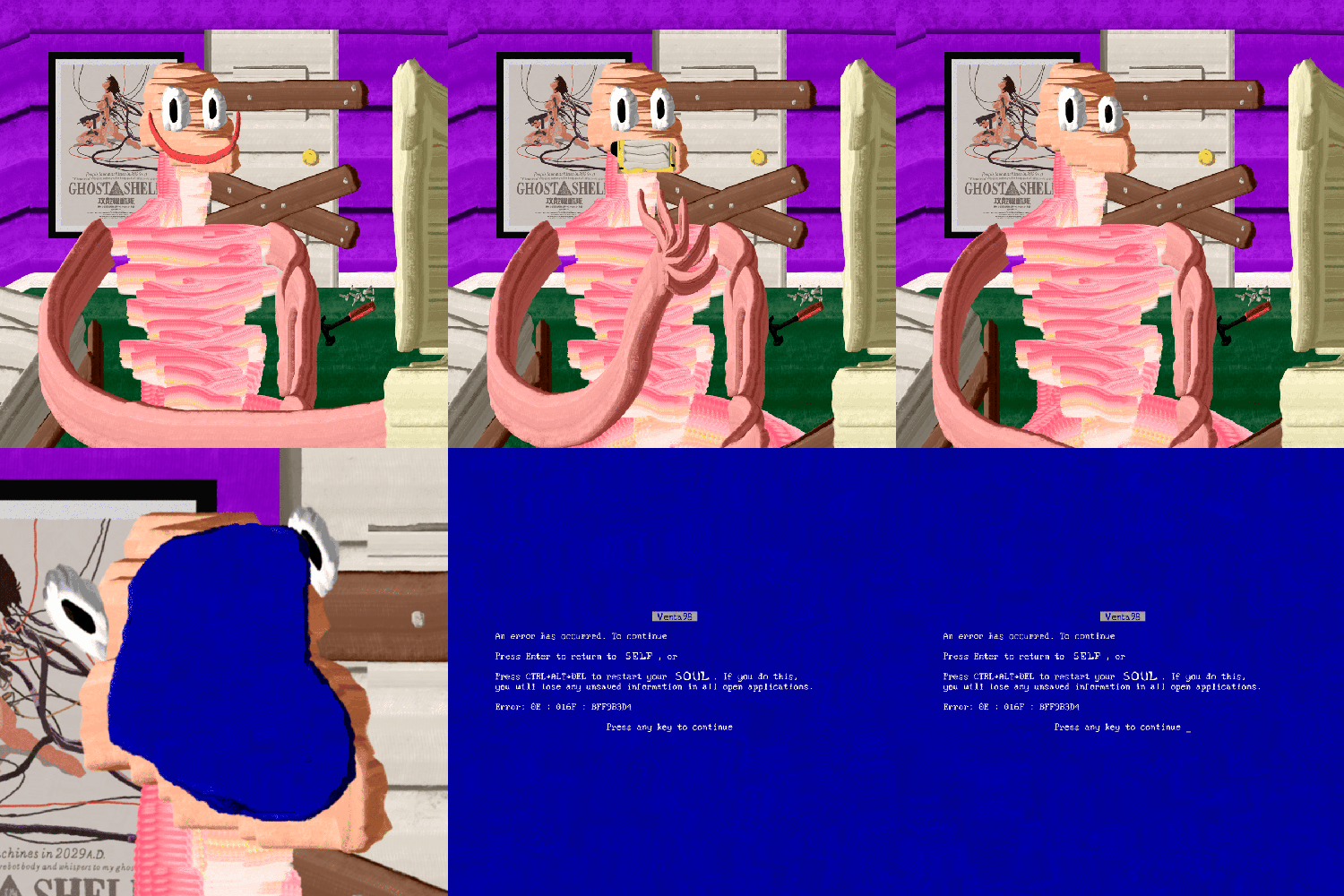
@Venta_art — I Am Become Computer
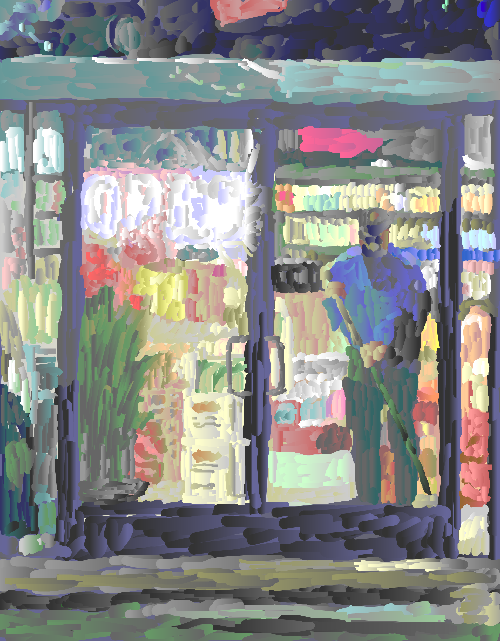
@frank_g_l — Man Mopping Floor
The special case loses the questions that came with being one. Is it art.Is it a medium. What does a collector actually own. Those were the arguments, but things have changed since — Yuma Sogo says it without ceremony: not here to validate digital art, here to use it. What replaces them are art's own questions, the general ones, which digital art now holds on the same terms as everybody else. How value is decided when execution costs almost nothing. What criticism is for when the discourse moves faster than it can think. What survives, who keeps it, and who gets to say so.
The technique question goes with it. If the distinction between physical and digital has genuinely expired, it can no longer decide anything — which is why Luciana Guerra can move a figure from oil paint into 3D, animation or AR without ranking the steps, treating the digital as one more material through which an image mutates. What the digital still gives that nothing else does is a separate matter, and a real one: Shojiro Nakaoka describes wanting to chain a thousand distortion pedals in series and nudge every knob a fraction at a time, and asks where you would even begin in the physical world.
That is the change worth naming. Not that digital art has been let in, but that it has been handed the whole inheritance, including the parts nobody wants.
@efekiraner — tropospheric nodes
One of them Cory Doctorow named enshittification: the curve by which platforms serve their users first, then their business customers, then only themselves. The internet is load-bearing for the digital world, and its decay reaches art as the regime of content — work oriented toward circulation rather than toward itself. Blanqspacer works inside the contradiction deliberately, using AI while working against the algorithmic culture it has come to embody, refusing to add to an endless stream of interchangeable images, and betting on the human to find the way out first.
The case to watch is the platform once known as Twitter, which is two things at once: the "public square", and the habitat of digital art itself. Reputations, prices and histories are made in that timeline. Also this year, X rewrote its recommendation system outright and attention moved. Audiences built over years thinned out overnight, while accounts nobody had followed were pushed in front of strangers. The images on both sides were the ones already posted the week before. Whatever attention had been measuring, it was not the work — which leaves the value question the field kept deferring with nothing left to lean on.
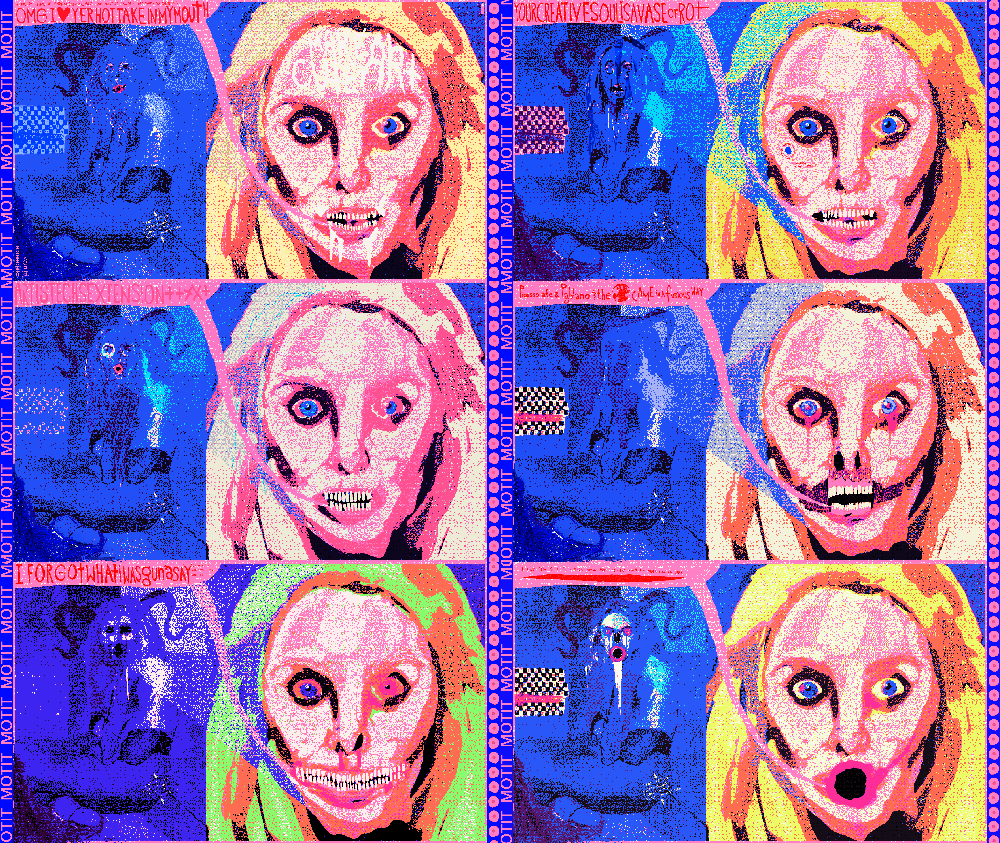
@COMPUTERBLOOD — BONNIE BLUE PERIOD
Obsolescence, in the meantime, has stopped being a theme and become a working condition. Danielle King's series was made with a tool that no longer exists, so the works are records of an instrument as much as of a mood. Tarp Cigarette takes the further step of making instability the material itself — magnetic drift, latent space, signal decaying through matter — and treats it as something to stay inside rather than resolve.
None of which is being mourned. Digital art was fed by what it had declared finished: the exhausted conventions of the physical arts were its material and its reason for existing at the same time. The decay now spreading through the digital world does the same, except that what it feeds is older than any technique — art's one durable function, which is to take the appearances of the world and give them back. The world on offer is in poor repair. Returning it is the work.
Both readings are held in the title. Matters as a noun: obsolete things. Matters as a verb: the obsolete counts.
What is left to look at is the world these practices come out of, which is the world everyone else is living in too: mediated end to end, held somewhere other than where it is seen, rendered on a panel, indexed and ranked before anybody looks. That condition is not a subject assigned to the artists. It is the ground they already stand on, and it is what makes a selection possible across techniques that otherwise share nothing. What decides a work is its content, not the form it arrives in.
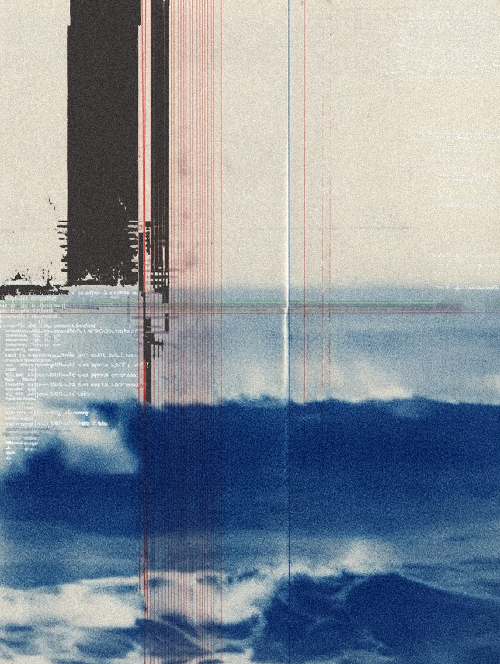
@motherlouisiane — Architecture of Distance
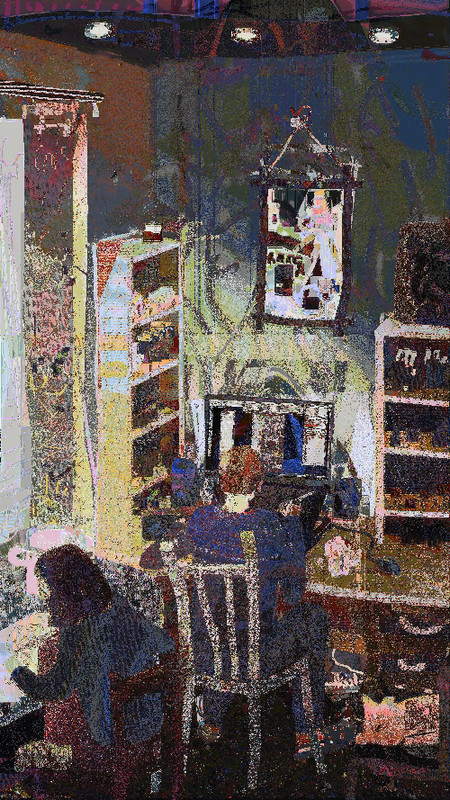
@Yuri_jjjj — Interior with artists
An exhibition about a practice coming of age, made inside a decaying internet, hosted in an ecosystem whose decline is a running joke, promoted through a timeline that has just finished reshuffling who gets seen. There is no vantage point outside this. There is only the work, and whether it holds.
The obsolete matters.
Featured Artists
amorvobiscum · blanqspacer · BlvnkNow · COMPUTERBLOOD · Crow · Danielle King · Efe Kiraner · Eloy · Frank Lepkowski · Garth Miró · grebenshi · Ilya Shkipin · Ilya Bliznets · John Thurman · K. Karamazov · khwampa · Lowbrow · Luciana Guerra · Paulo JecaPresidente de Internet · Shojiro Nakaoka · strakts · tarp cigarette · KUGUTSU · Venta · Vidal Herrera · Yuma Sogo · Yuri · zlaserrr