

ACCOMPART'S Metaverse Art Gallery: Five Key Principles
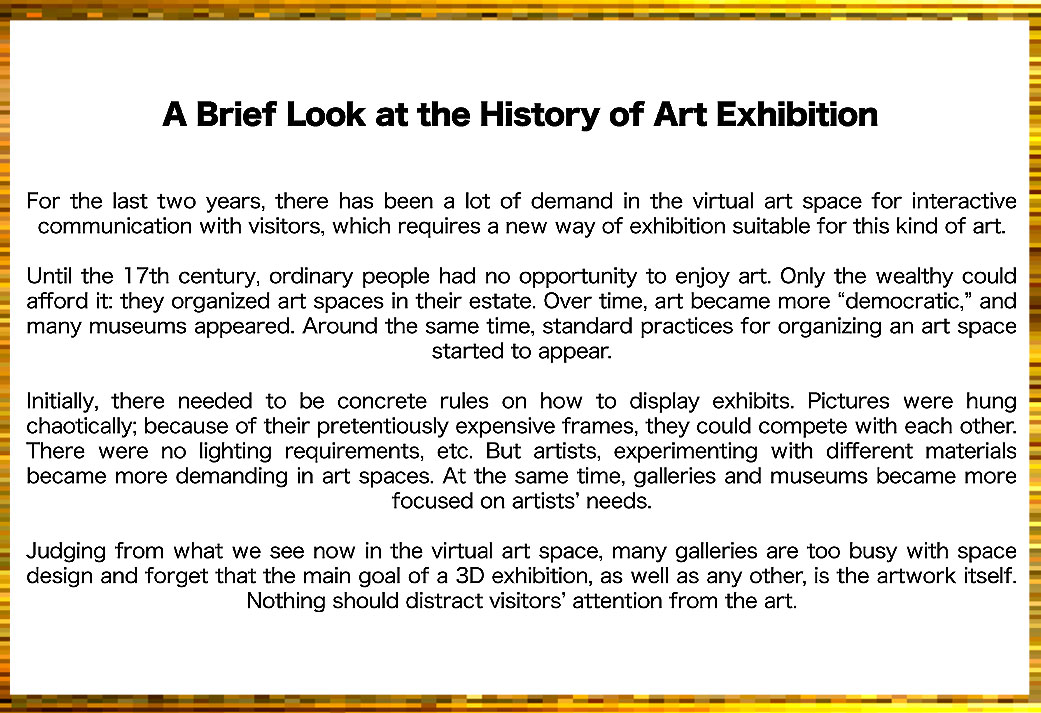
Approximately five years ago, I came across a book that delved into the evolution of the art exhibition space. I wondered if there could be any further innovation with the exhibition space. It seems like everything is already done in this field. But, returning to these thoughts today, understand that there could be an opportunity for further development.
Approximately five years ago, I came across a book that delved into the evolution of the art exhibition space. I wondered if there could be any further innovation with the exhibition space. It seems like everything is already done in this field. But, returning to these thoughts today, understand that there could be an opportunity for further development.
Five Key Principles of Creating ACCOMPART'S Metaverse Art Space
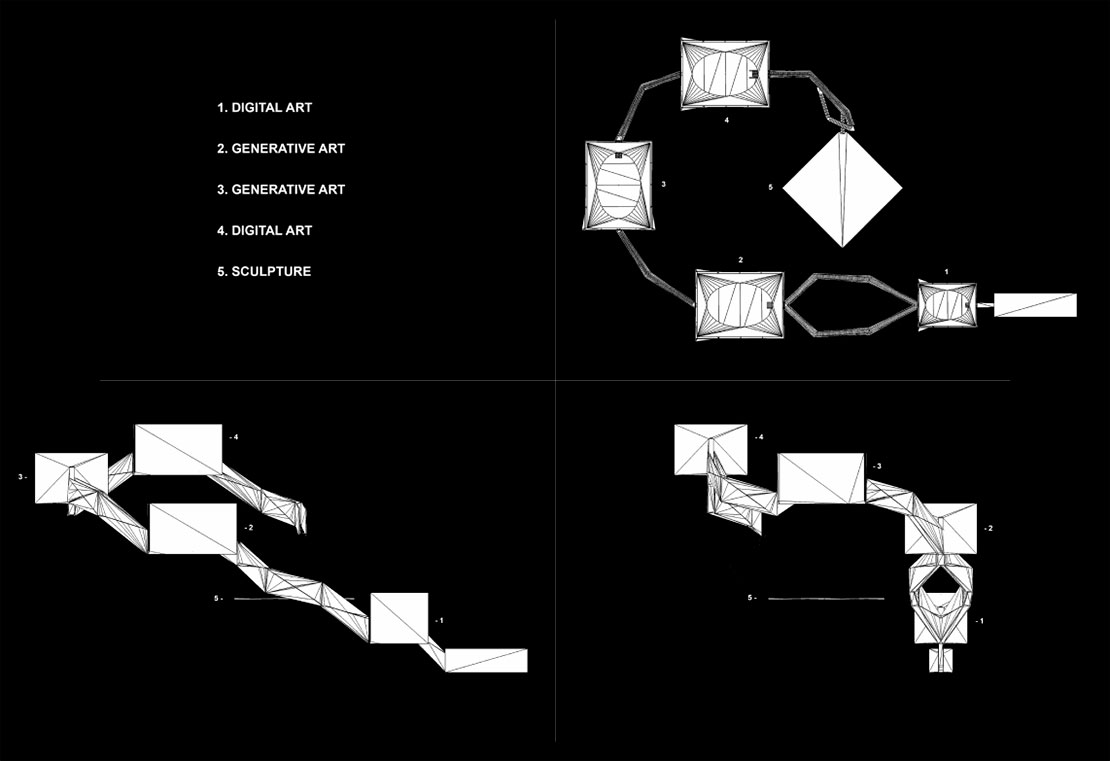
By developing our exposition solutions in the metaverse, our team tried to take into account the principles of physical space exposition. Every architectural element of our digital gallery has an intellectual, philosophical meaning. Further, I would like to “decode” these key components and explain how an art space and a visitor can interact with each other in a new digital reality.
First of all, we tried our best to match the following principles:
1. Space
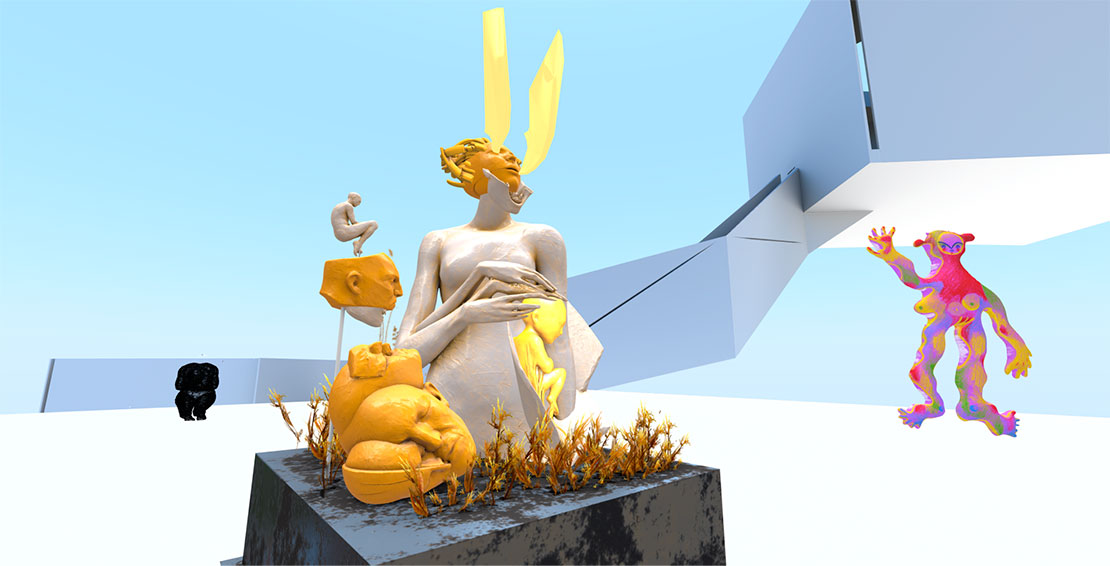
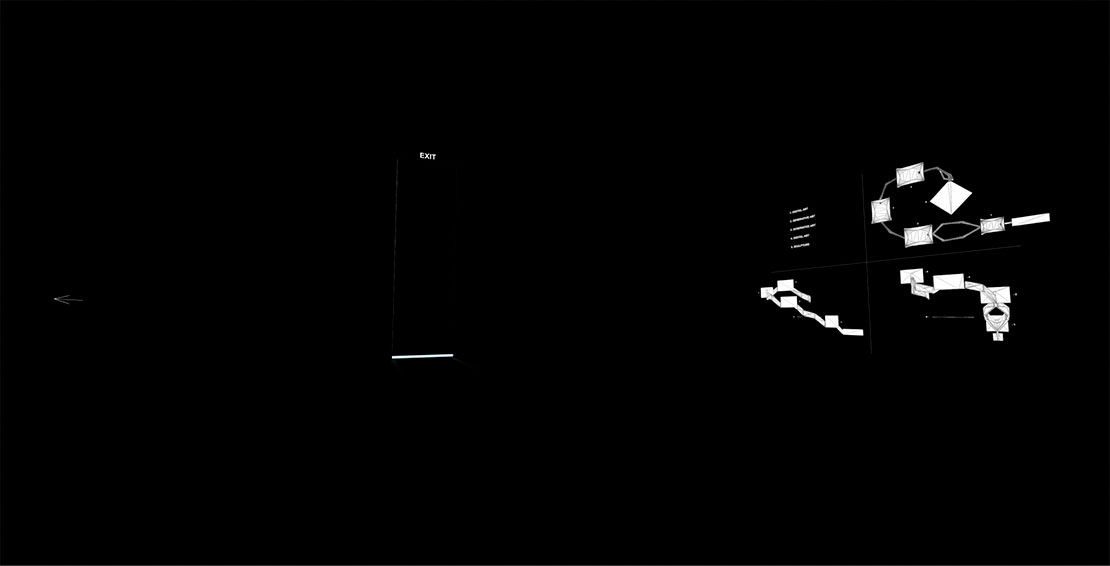
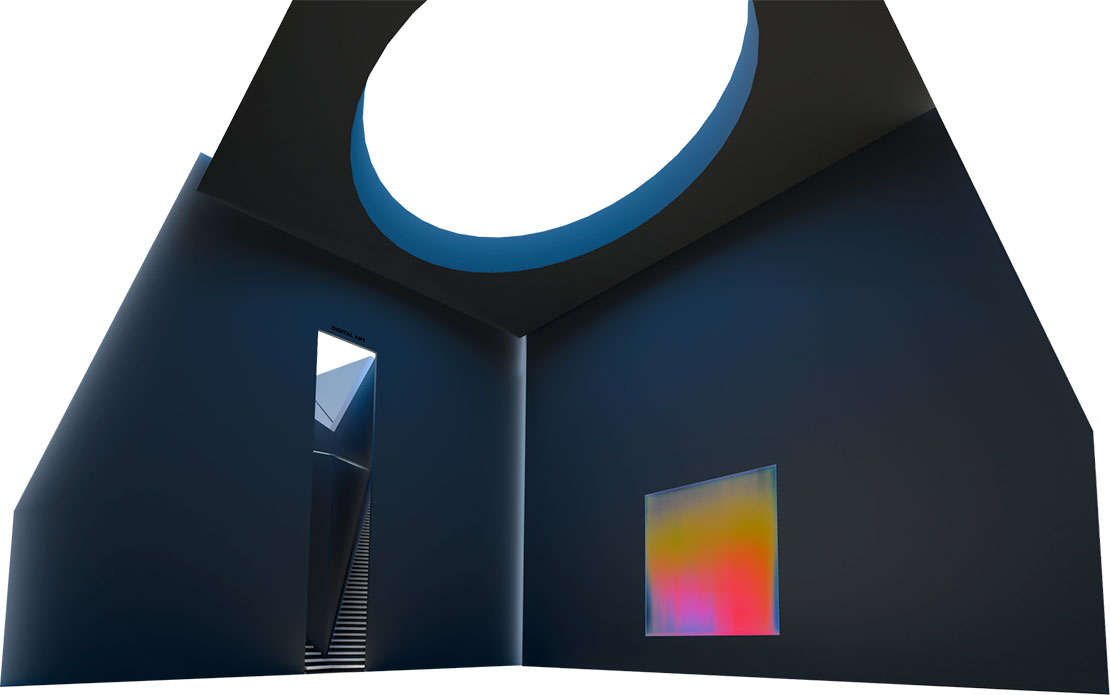
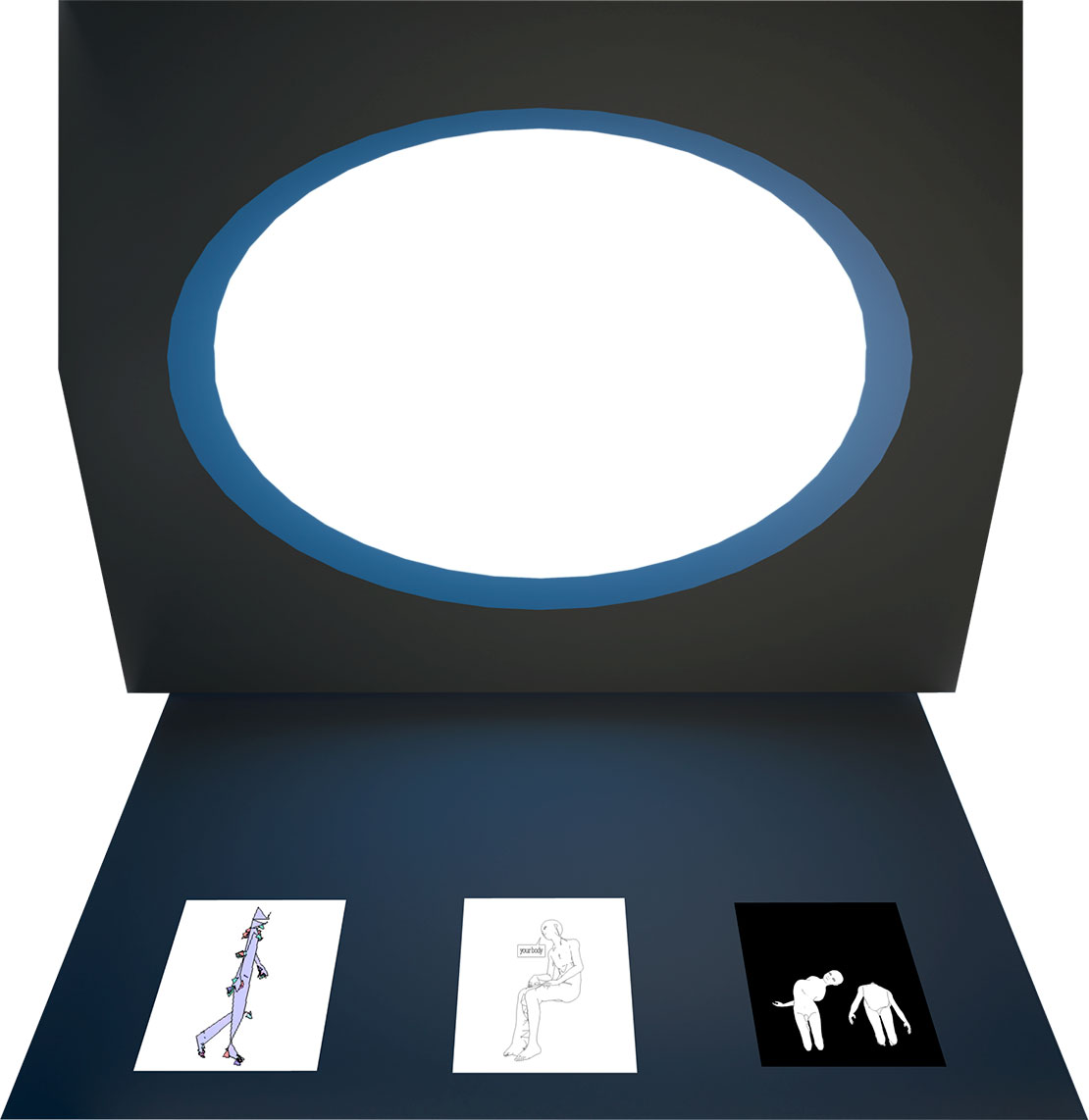
In our art space, we implemented the ideas of spatial asceticism. We made the walls light and didn't use any architectural elements that distract from the artwork. There are no columns, the second level floor, our room dividers restricting the movement of avatars. By this way, visitors get an opportunity to understand the real size of an artwork and observe it from near and far.
2. Exposition
Artwork cannot be hung by overlapping each other. The less artwork on the wall, the better. It's a bad idea to overload walls with artwork of different styles mixing with each other.
3. Eco-friendliness
We care about conserving energy, so in our space, we use a natural lighting system created by additional light sources in the ceiling. This also gives s feeling of space and air.
4. Logistics
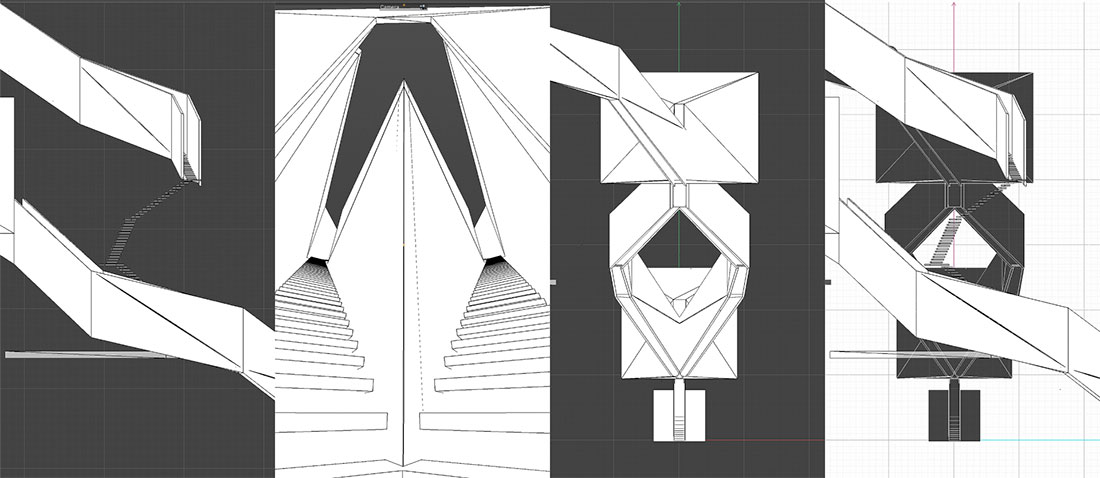
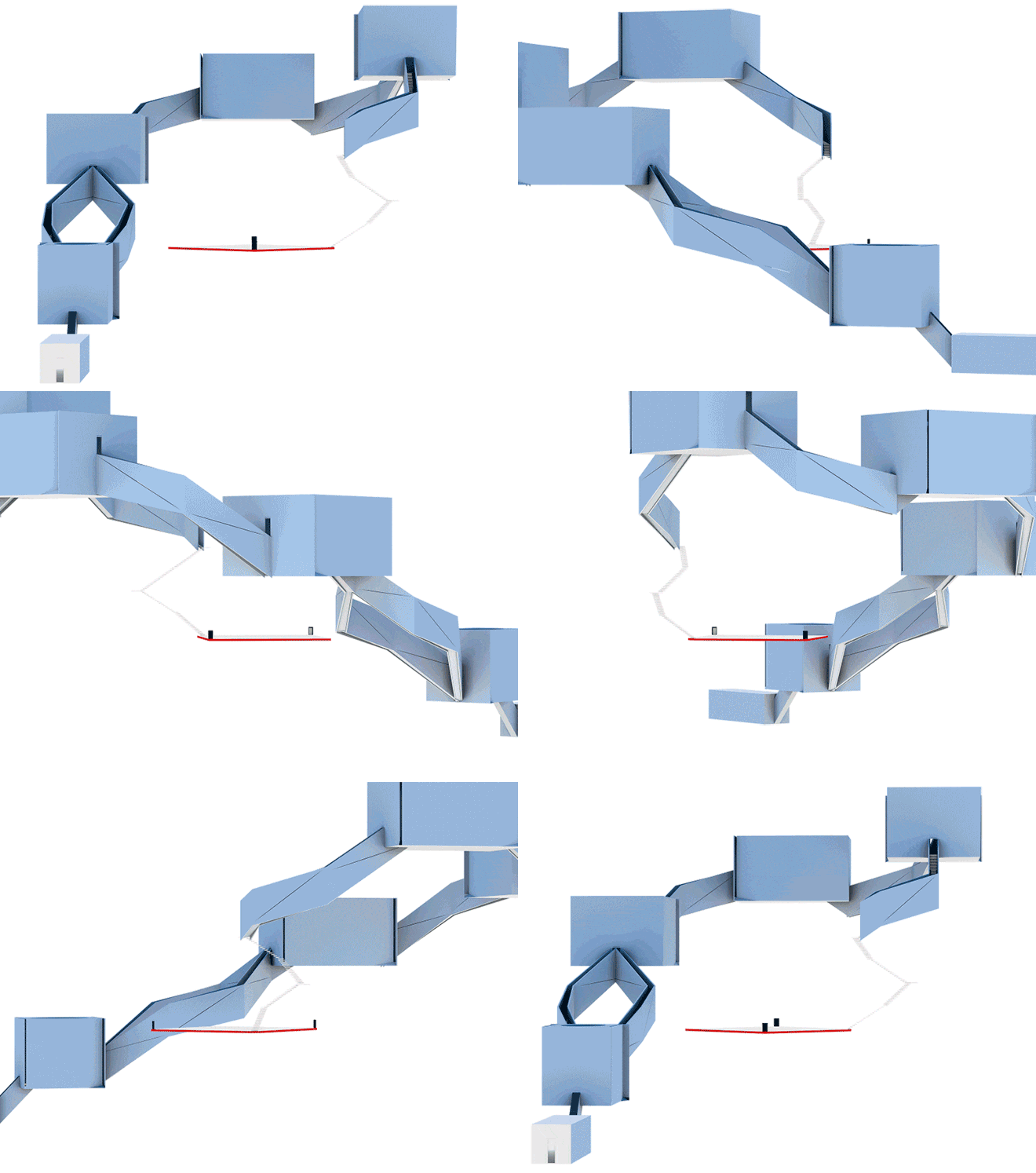
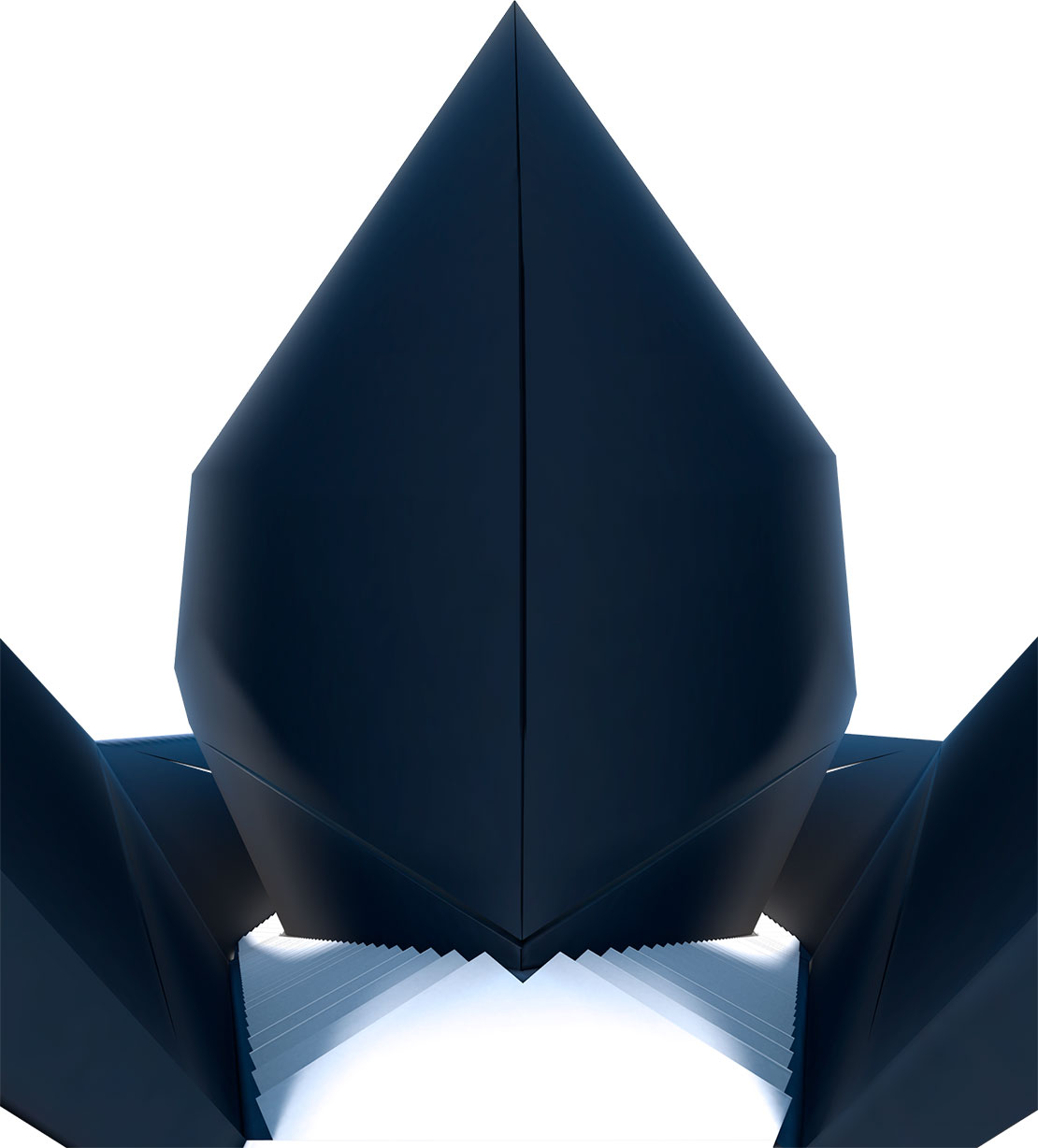
We also found a unique special solution — a “transition stairs” bringing a visitor from one art space to the other. It's an additional interactive option in our art space and a brilliant idea. A long transition gives a visitor an opportunity to think about what he has just seen in the previous art space. Also, before entering a new art space, in the “transition stairs”, he gets the information about the art style of the works he will see now. So, by helping to learn about lots of different digital art styles and types, the transition stairs has an educational function.
5. Education
Any art space has a mission to educate a visitor. We grouped our art spaces by types and styles of digital art. By this way, it's easier for a visitor to understand and comprehend the artwork as well as to start having a good grasp of digital art styles, not only of artists.
In the next post, I am going to speak about the artistics and philosophical synthesis of a gallery space that shows up by interacting with a visitor.