

Four Powers Driving Generative Artists
This article is for generative artists who dream to succeed in their field. I'll explain some important principles that will help them get on the right track or make changes in the creative process to better achieve success.
This article is for generative artists who dream to succeed in their field. I'll explain some important principles that will help them get on the right track or make changes in the creative process to better achieve success. Have you ever been to the studio of a little-known painter, observing his work with surprise as he brings them out from the archives and leans them against the wall? After a while, you understand that no one knows about this painter, and his artwork just does not exist outside the studio. You wonder why he is not famous to the general public. How can that be so? Unfortunately, lots of worthy artwork remains unknown. The reason for it may be that artists are unaware of four important principles that are just as important as the creative process itself. Let me explain in detail how to use these “four powers” to achieve true and lasting success as a generative artist.
The power of trust
People who interact with you and your art should get the impression that you are a true professional in your field. This enables them to trust your expertise and follow your talent. So, how can you build trust with your audience?
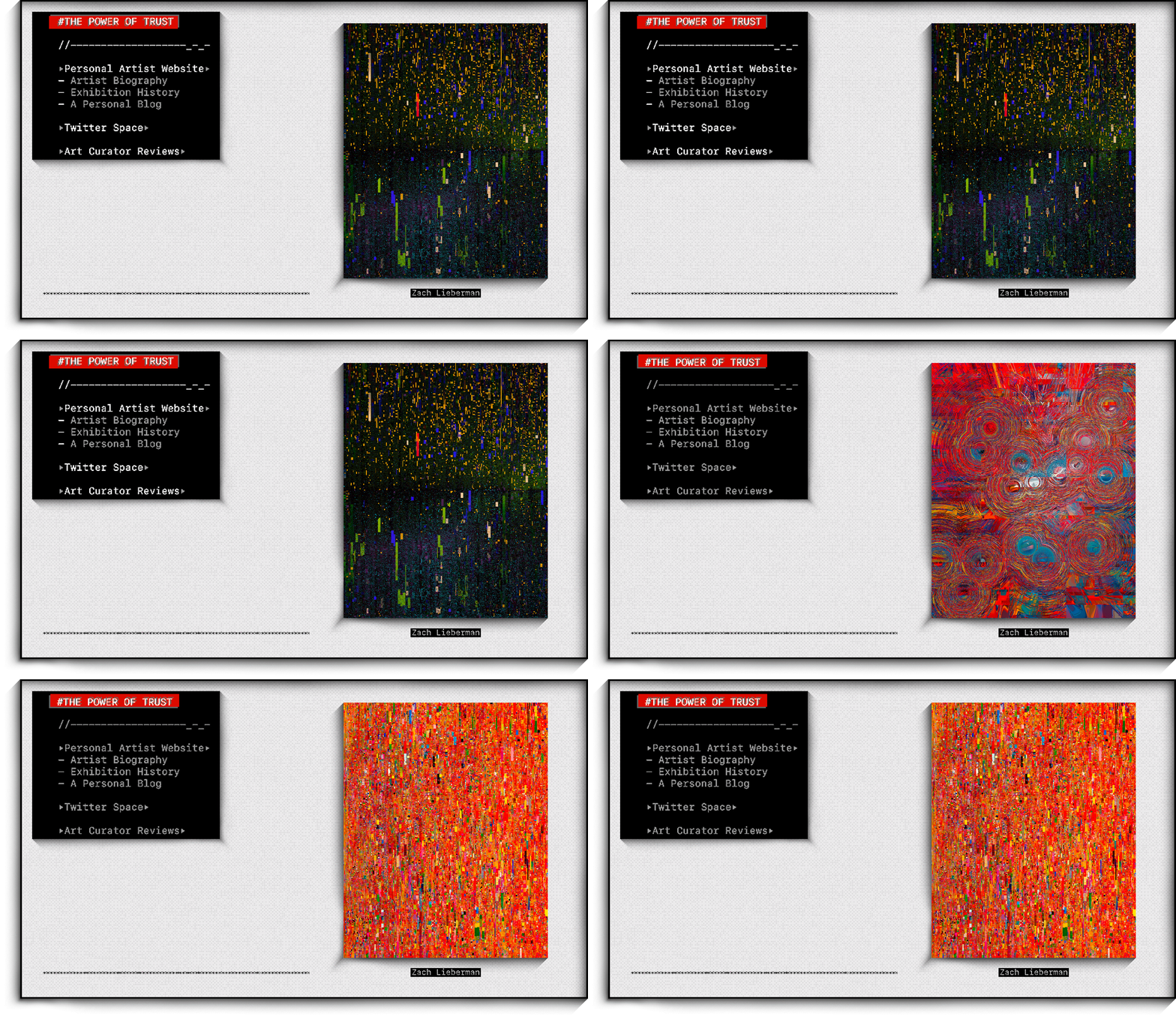
Personal Artist Website. It might sound cliché, but every artist should have a website where anybody can easily have a look at their generative art. It is very likely that an art collector coming to your website has already seen your work somewhere else. Your website gives them the opportunity to understand the “scope” of your artistic activity.
Artist Biography: this mentions your professional background, including art education. From my experience, most generative artists, before they started their art careers, were programmers in successful IT companies and have a lot of coding experience. For me, as an art collector, it's a huge plus in a biography.
Exhibition History: the more actively an artist exhibits his work, the more chances he has to knock on the doors of the world's best-known art museums. Post all your activities on your page, even if these are collective exhibitions or small collaborations.
A Personal Blog: this gives you the perfect opportunity to show your personal side to your audience, for example, express your critical opinion about the generative art world or demonstrate your artistic courage.
Twitter Space. Every generative artist must have Twitter. This may change in the future, but right now, it's true. Why Twitter? Because all of the art collectors who are interested in generative art are on Twitter. All of them came from the crypto industry and IT. Don't think that a traditional art collector will buy your artwork… these collectors are still not ready for it — believe me, I've already tried. I did a physical exhibition of generative art in Art Miami, and everyone was confused!
Join Twitter spaces as an art expert or a new original representative of the art world. It will help enormously in your reputation and give you the opportunity to build your personal brand as an influencer in the field.
Art Curator Reviews. Art curator critical reviews are an important sign of an artist's success. How the artwork is evaluated in these analyses, in this sense, does not matter — the quantity of them on the Internet is far more important than the “quality”. Whether these reviews are good or bad is not important. The main thing is that your artwork is debatable and provokes a discussion
The Power of Network
I know most artists like privacy and solitude, and they have little social interaction. However, in my opinion, it is necessary for an artist to get a following and know how to grow it.
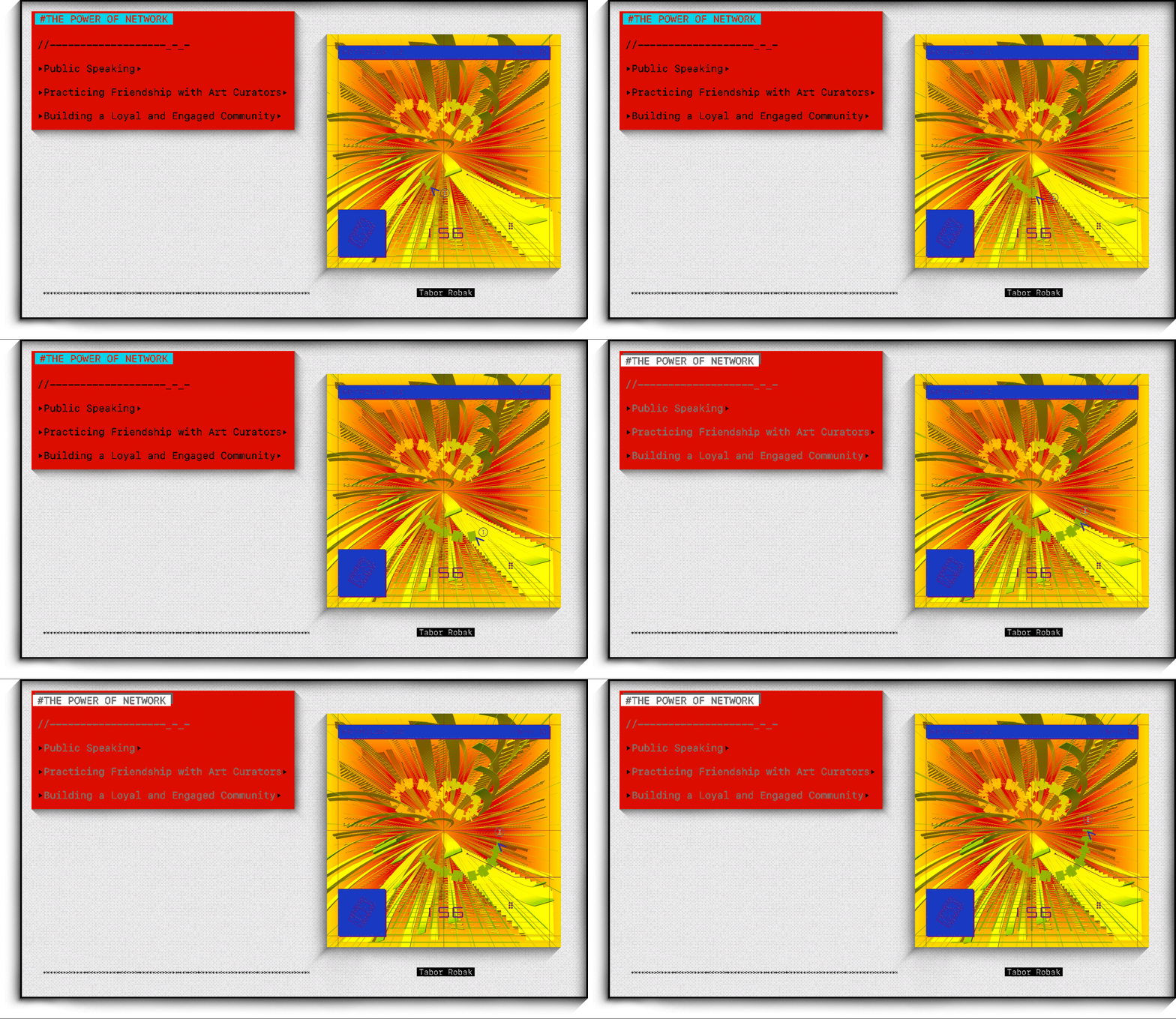
Public Speaking, such as participating in art workshops & panels, art exhibition activities, teaching in universities and art schools, etc. All these activities are an essential part of your strategy to grow as an artist.
Practicing Friendship with Art Curators. Friendships between artists and curators are probably one of the most important contacts in the artist's social networking: the more, the better. Art curators are deeply influential in creating the networked opportunities necessary for art promotion. Connecting with art curators is the key to opening the door to art collectors and may eventually lead to the purchase of your generative art.
Building a Loyal and Engaged Community. Social networking and social media give you the opportunity to build a community of people who are really interested in your generative art. They are your fans, not just followers. Your loyal community will grow quicker if you engage actively with them. Your engagement with art market experts counts as well. Every link in this chain is equally important.
The Power of Provenance
Will anybody buy the artwork of an artist with little or no history? Surely, it may happen because of the NFT hype, yet in most cases, it would actually be an accidental purchase. However, some artists can sell out a drop with a collection size over 1000 in minutes if they use the right marketing tools to artificially stimulate interest. Euphoric after success, they may forget that it was simply marketing hype, and it may never happen again if they don't nurture their community. No artist should relax after their first successful drop. Responsibility only grows: you have to show your community that you care about them and are continually developing in your career. If you don't, your artwork will go down in value: welcome to the blockchain. The blockchain provides a very accurate reflection of your value as an artist. 🙂
So, what is important to focus on if you want to sell your artwork:
Your Exhibition History. As mentioned above, the more you exhibit, the more confident an art collector feels when buying your artwork.
Your Unique Artistic Style. In the previous post, I've already explained why it is important for an artist to be unique. An individual artistic style is the key to success. Briefly, your signature style has to be clearly expressed in your artwork — it has to be recognizable. At the same time, it does not mean that this style cannot be changed. Yet the reasons for style evolution have to be clear for your audience. For example, if you compare the early works of Vasiliy Kandinskiy with his later works, you'll see that his artistic style changed as he grew up as both an artist and as a person.
Your Launchpad Strategy. If you dropped your NFT project on the Art Blocks platform, you shouldn't make your next drop on the Fxhash platform because you strategically violate the history of value creation and reduce the price of your generative art that was sold in the past. There is no sense in chasing any NFT platform that promises you a great sale. As an art collector, I will definitely get rid of the artwork of an artist who, after dropping his collection to a platform with a high reputation level, later decides to drop it to platforms with the “wholesale strategy”. However, if your first drop is on Fxhash, it might be a good start.
The Power of Artistic Concept
The last of four powers defines how high you might “fly” in your artistic career.
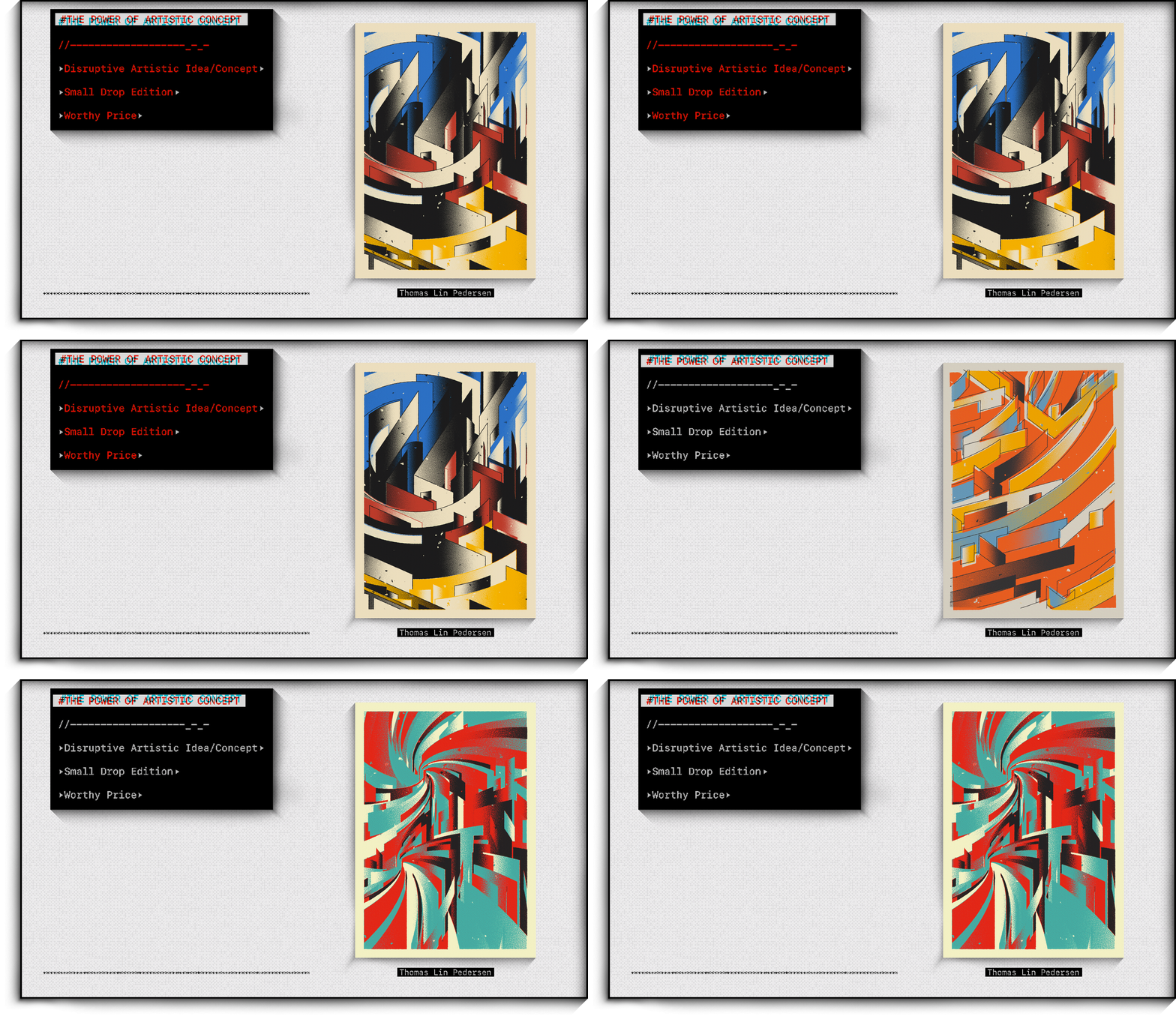
Disruptive Artistic Idea/Concept. How often do you hear phrases like “I could paint this myself” when people speak about some artwork in museums? We say something like this if we don't understand the artistic concept. The main thing here is that there are few generative artists who reveal and describe in detail their project. I even believe that most generative artists don't have any concept or direction — they just experiment with code. Is there a future for such art? Personally, I doubt it. So, every generative art collection has to have a detailed art curator description and include a strong creative concept. If I purchase artwork for my collection, I fall in love not just with an image but also with a conceptual form.
Small Drop Edition.You won't find unique artwork sold in big numbers. A limited quantity increases the value. If you make the decision to drop 10,000 pieces, remember that this can devalue your art.
Worthy Price. Don't hesitate to determine a fair wage for your work. My advice is to set the price not by looking at the market rates, but by starting with your desired rate so that if someone buys from you, you feel well paid. Generative art resides on the blockchain, so in the future, the transparency of the system will manage the secondary market price of your artwork and also reflect how well you use these four powers to promote your art.
As you see, in this post, I didn't mention the art itself because selling art as just art is not beneficial. By selling your artwork, you are selling a piece of your personality as an artist and a creator!
By