

Exploring Dimensions: An Interview with Jérôme Allavena on His Unique Artistic Journey
@AllavenaJerome "I am the first spectator of my works, I want them to galvanize me and shake me up, to surprise me forever and hypnotize me."
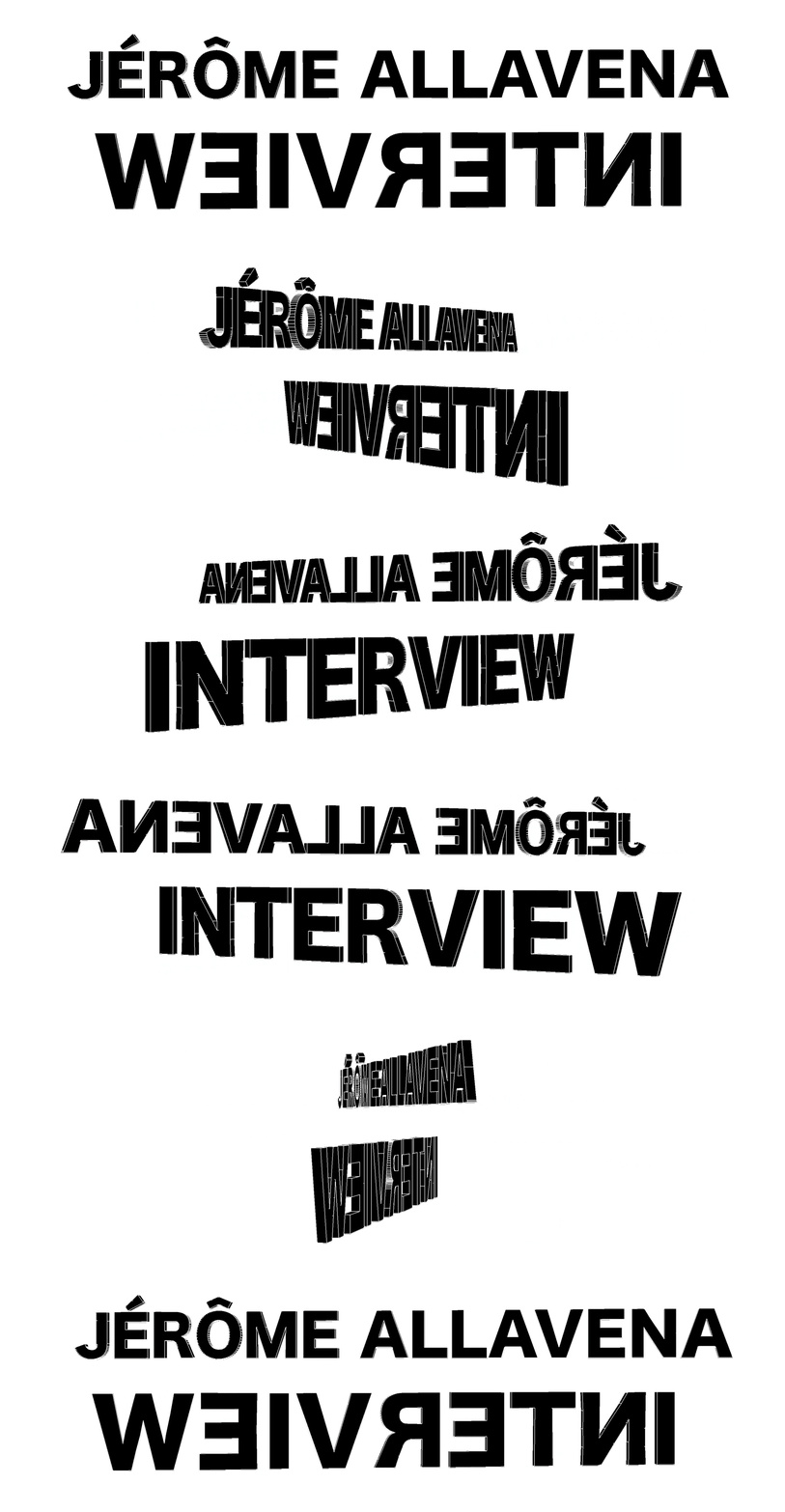 Jérôme Allavena
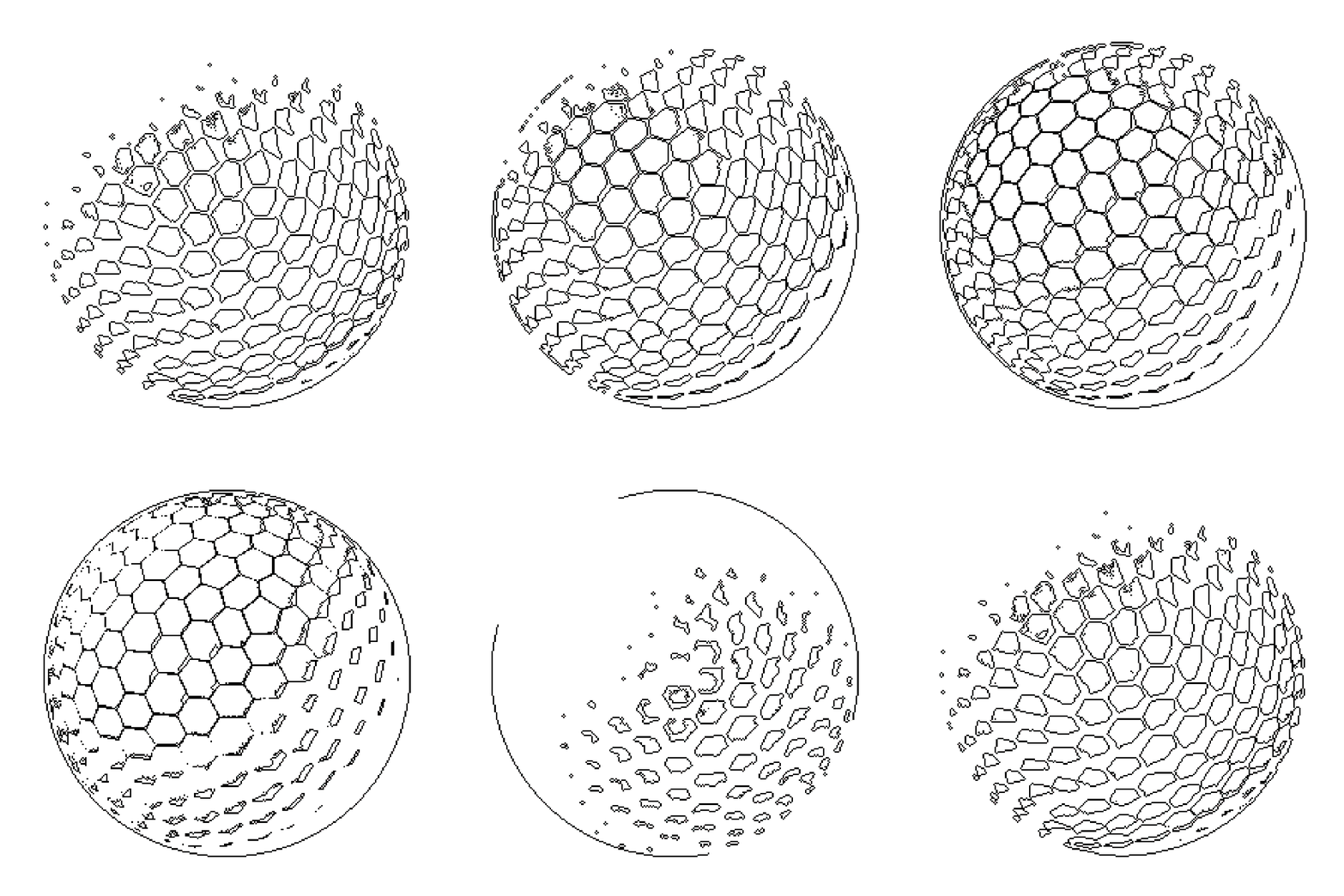
Born in 1979 in Montreuil, France, Jérôme Allavena (@AllavenaJerome) explores the potential of the line and trace in drawing, transforming it into a space for experimentation. Using a method of deconstruction and reconstruction, he questions the status, dimensions, and temporality of an image and triggers new viewpoints that a cursory glance might miss. For Allavena, drawing is a design process that expresses its genesis, its 'mental thing,' and its construction, while also capturing its temporality, aiming to represent the elusive fourth dimension.
Allavena obtained his DNSEP from the EESI in Angoulême in 2008. His work gained attention through group exhibitions at art centers like FRAC Poitou-Charentes (2010, 2014), Palais de Tokyo (2010, 2011), and Ricard Corporate Foundation (Paris, 2012), as well as galleries including Galerie Anne Barrault (Paris, 2012), Galerie De Roussan (2012, Biennale de Belleville), and Galerie Houg (Paris, 2015). He has participated in residencies at the Cité des Arts in Paris (2009-2010) and Le Pavillon at the Palais de Tokyo (2010-2011). His work has also been featured in exhibitions abroad, in cities such as Ho Chi Minh (Vietnam), Berlin (Germany), Brussels (Belgium), Cork (Ireland), Dallas (United States), Hiroshima (Japan), Geneva (Switzerland), and Helsinki (Finland).
Could you explain the personal and academic journey that has shaped your distinctive style?
A/ I imagine that the environment conducive to creation and questioning that is art schools is largely responsible. I graduated from Fine Arts in Angoulême (France) in 2008.
This school has the particularity of having two major research centers. Comics and digital arts. By navigating between the two, I gradually developed where I enjoy drawing the most today. Ultimately, it is by operating on the border between things that I feel like I come closest to the very essence of drawing. I am mixed race and I grew up on the Italian border, perhaps there is a link with this inability to choose. Between the representative and the abstract for example. Between the minimalism of the clear line and the swarming of pixels, things are built or destroyed. The time we give to things, to reading an image, to understanding it, to seeing it again and again. How they metamorphose, transform, perhaps even become monstrous or absurd for an instant.
I am deeply and fundamentally invested in my desire to push my drawing into territories that are not initially mine. Very, very much want to create bridges with all kinds of plastic practices like painting or sculpture too. Finding how to create connections and bring different worlds into dialogue in display systems remains an unrivaled driving force.
Between the minimalism of the clear line and the swarming of pixels, things are built or destroyed.
"Horror Vacui" Auction with the theme "Digital scarcity is the new void" is an exhibition that refers to art on the blockchain, artistic creation is linked to a space to be filled. Has crypto art changed the way you create?
A/ My practice of video and animated gifs in particular dates back to this period of fine arts. It very quickly appeared as a place in its own right where the drawing is enriched with this obvious temporal and narrative charge which I lacked in the printed or painted image. I loved the idea of a gif being online and visible to the whole world at all hours. Having become complementary, I have always kept this practice to the point of almost systematically having animations in my exhibitions. When the NFT phenomenon appeared, I was invited by Nicolas Sassoon (we were together at the Beaux Arts) to join the movement.
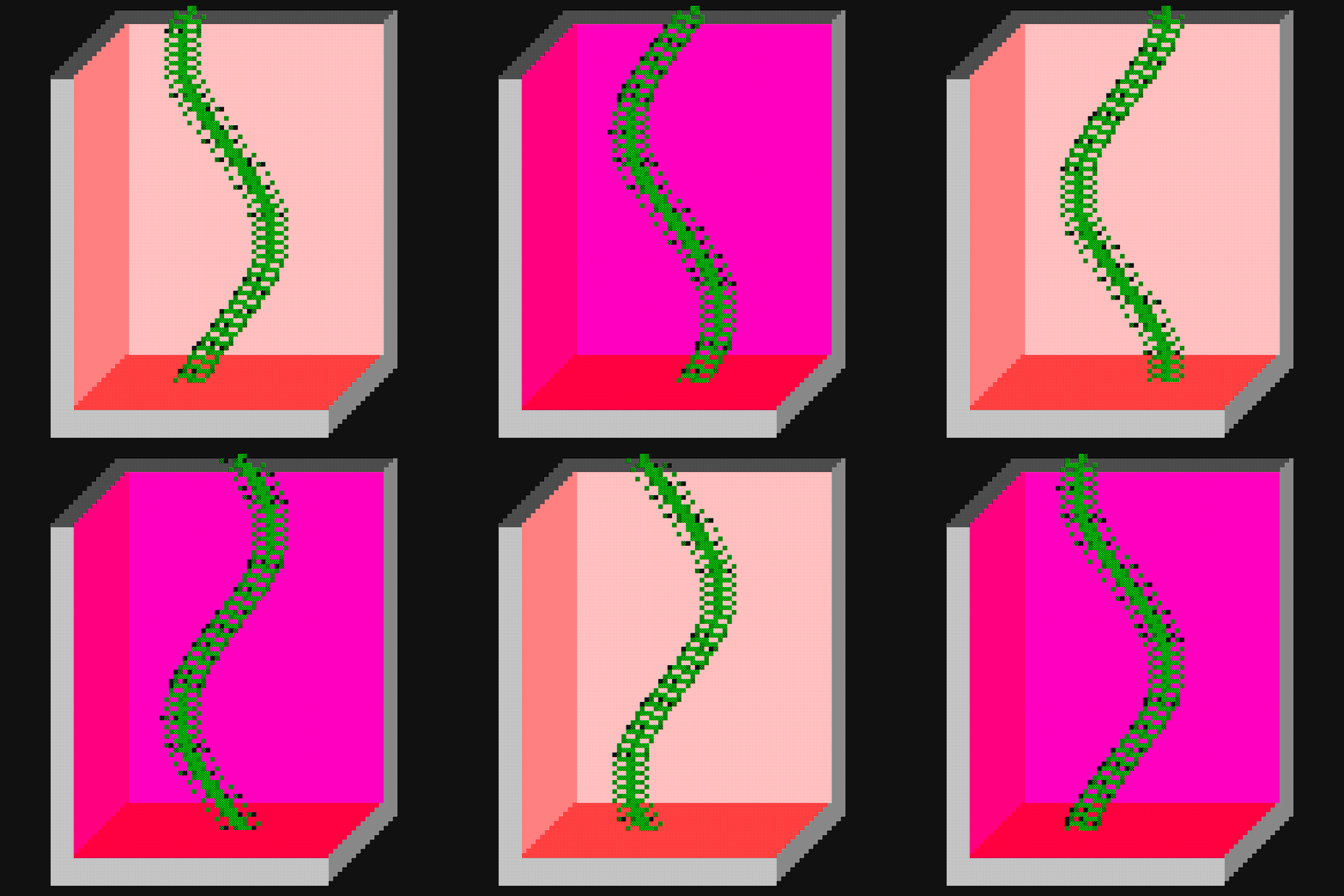
I think from there, I felt like I was shifting into higher gear on different levels. Intimately and emotionally, the expression found itself liberated and energized.
This also multiplied my production and my desire to share my works with the whole world.
Today I can no longer imagine an exhibition without this animated part which is an integral part of my creative process. It is often the starting point where things are born and take shape in different mediums such as painting or sculpture.
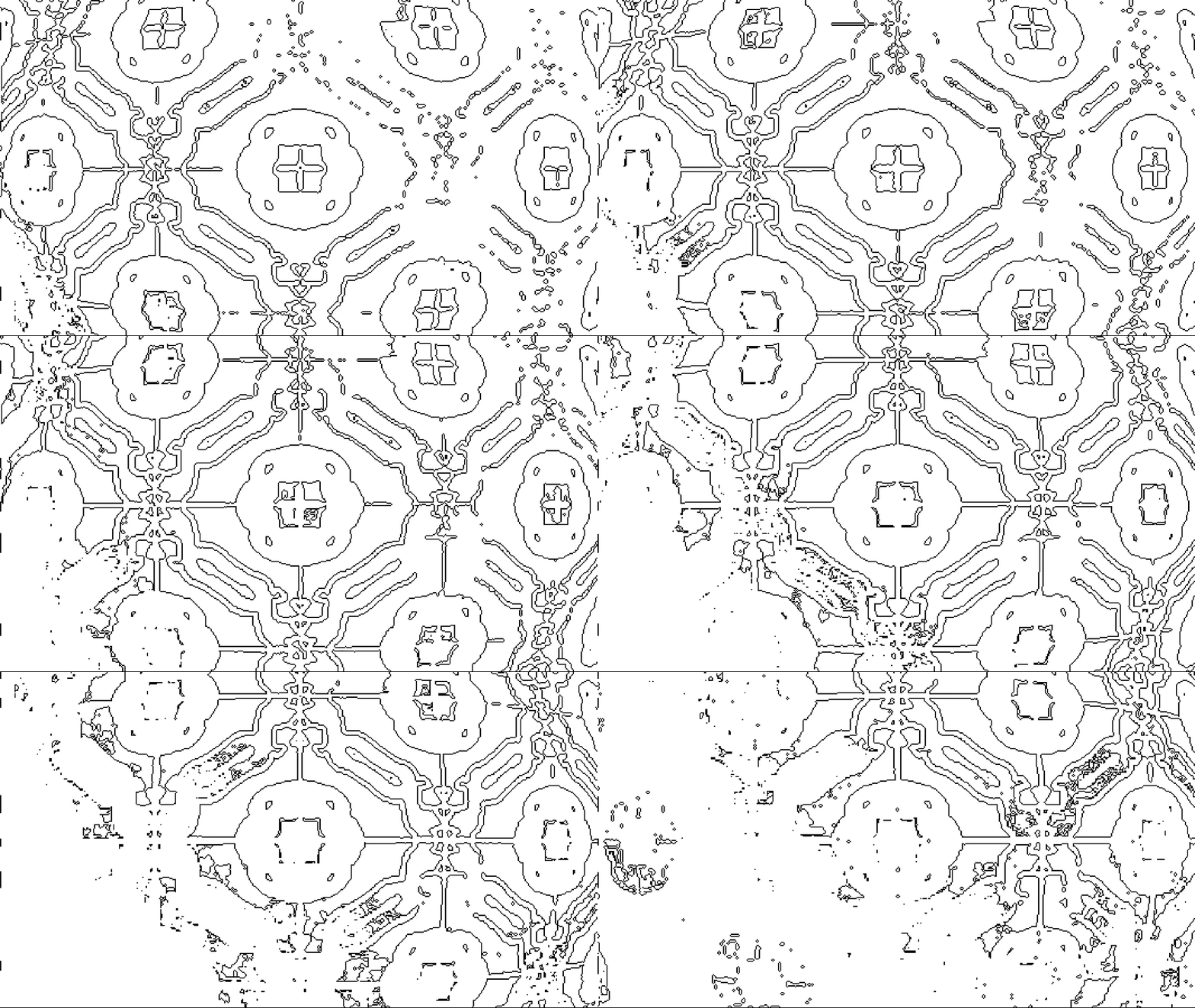
From the description of your process there is a main question about the image through its deconstruction/reconstruction. How is the form of this technique?
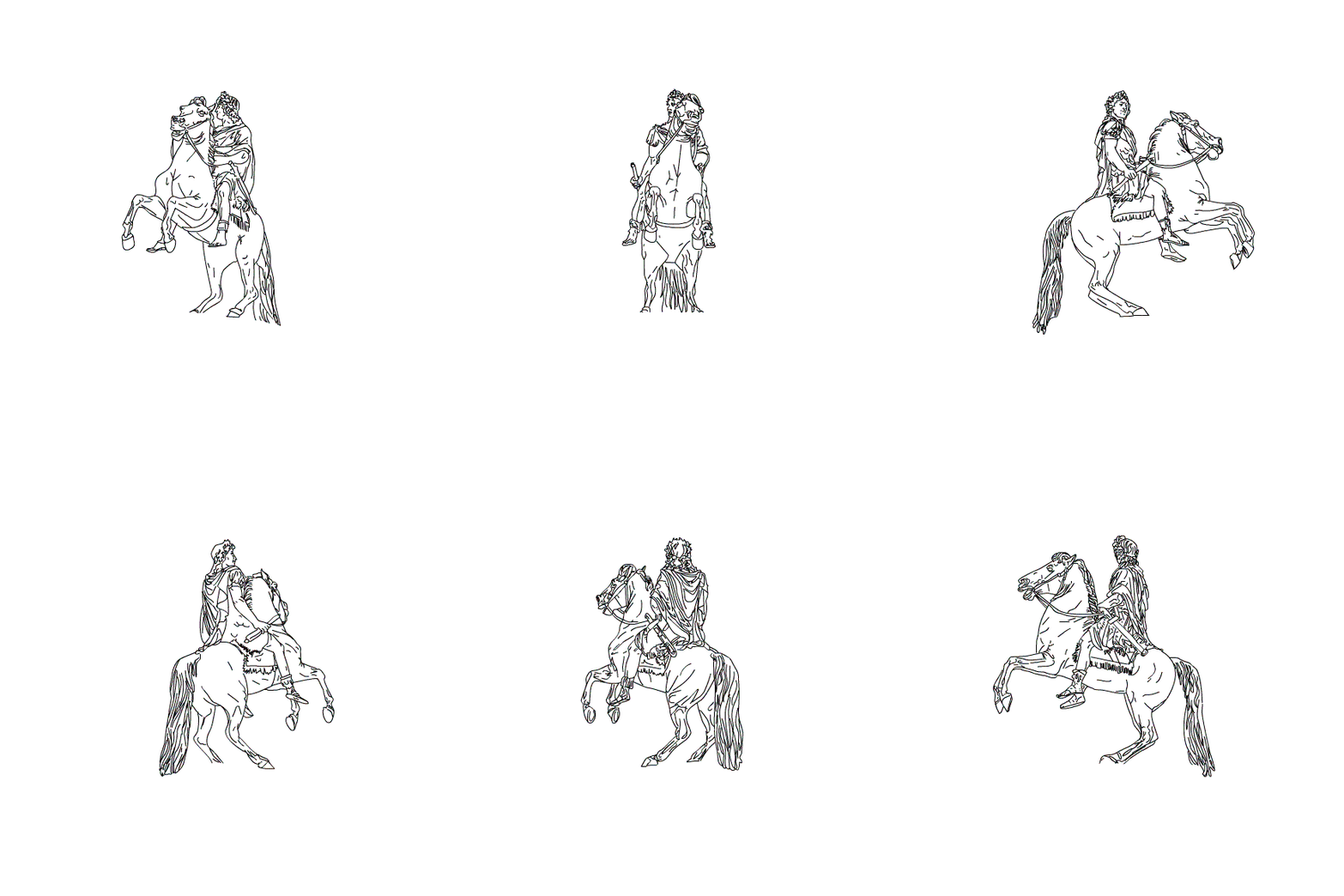
A/ I think that this method of deconstruction/reconstruction of an image comes to me from my research in cartography and my need to read an image as one would read a map describing a territory which is being formed and discovered before our eyes. Or like when you come out of a long tunnel and your eyes have to adapt to this sudden blinding brightness to recognize the environment around you (the opposite is true in the dark). The memory must then chase the information to try to recompose an image which is already disappearing again. There is then a real temporal issue which engages the viewer and who is no longer in passive contemplation but who integrates (perhaps without realizing it) a process that we call “Cosa Mentale” of drawing. Where the fundamental of drawing is no longer only in what we observe but also and mainly in what it generates mentally.
Technically I am not very familiar with new 3D or AI softwares. I only use old programs like flash or photoshop and I work mainly frame by frame.
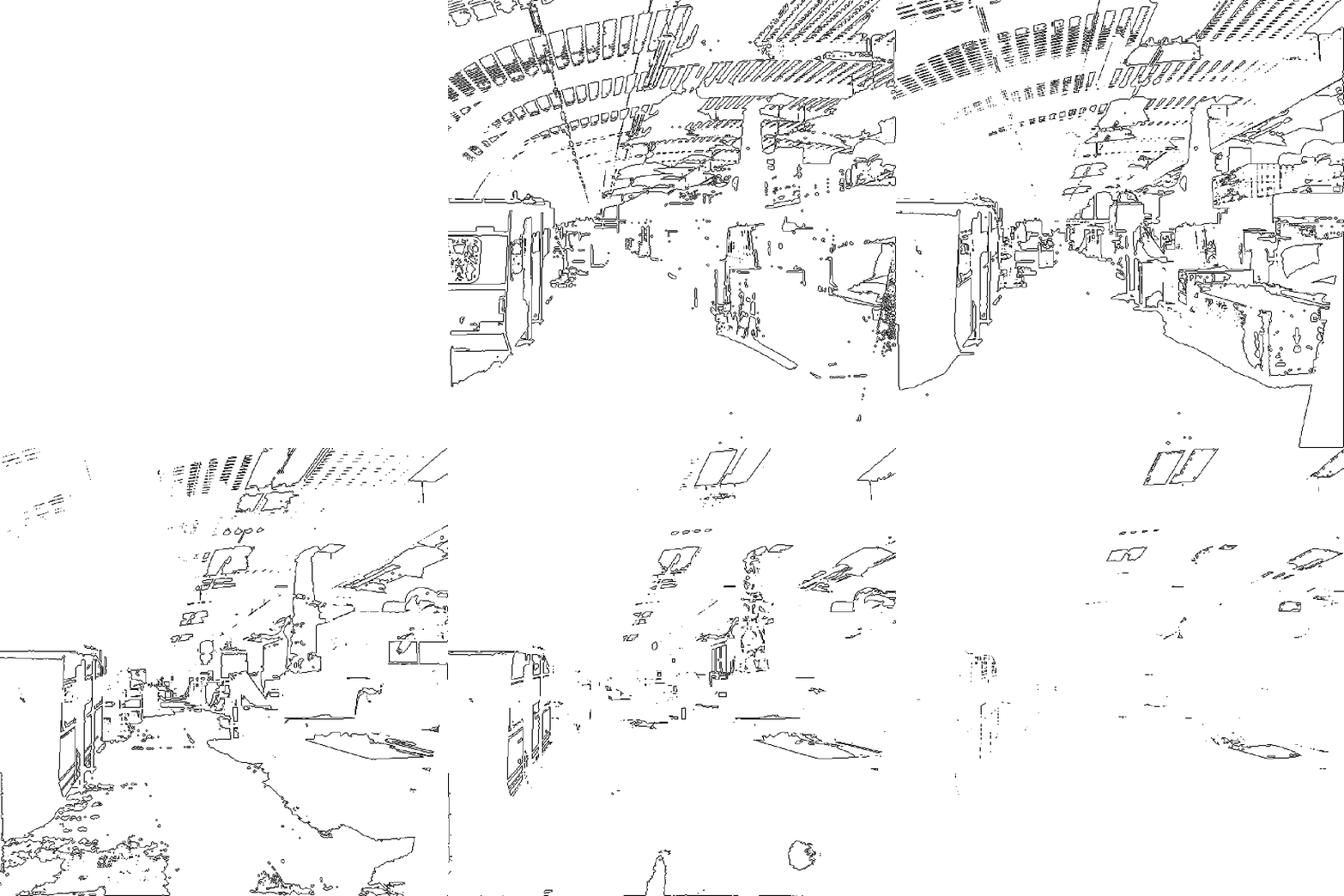
Can you describe the differences you perceive between your digital and material work?
A/ Everything is linked, one feeds the other. They are all independent as works and respond to the best of their materiality. As I said, I feel an intrinsic need for his method of making video. Painting, which is a more recent practice for me, answers more physical questions. A painting will always be appreciated more by having it in front of you than from a photo on a screen. There is a presence, specific to the device, whether in painting or sculpture which become parameters with which I want to confront my drawing and integrate these notions of temporality, cartography, and intimacy too. How does a subject go through these different states? That's fun for me too, putting in place procedures that will surprise me. I am the first spectator of my works, I want them to galvanize me and shake me up, to surprise me forever and hypnotize me.
I am the first spectator of my works, I want them to galvanize me and shake me up, to surprise me forever and hypnotize me.
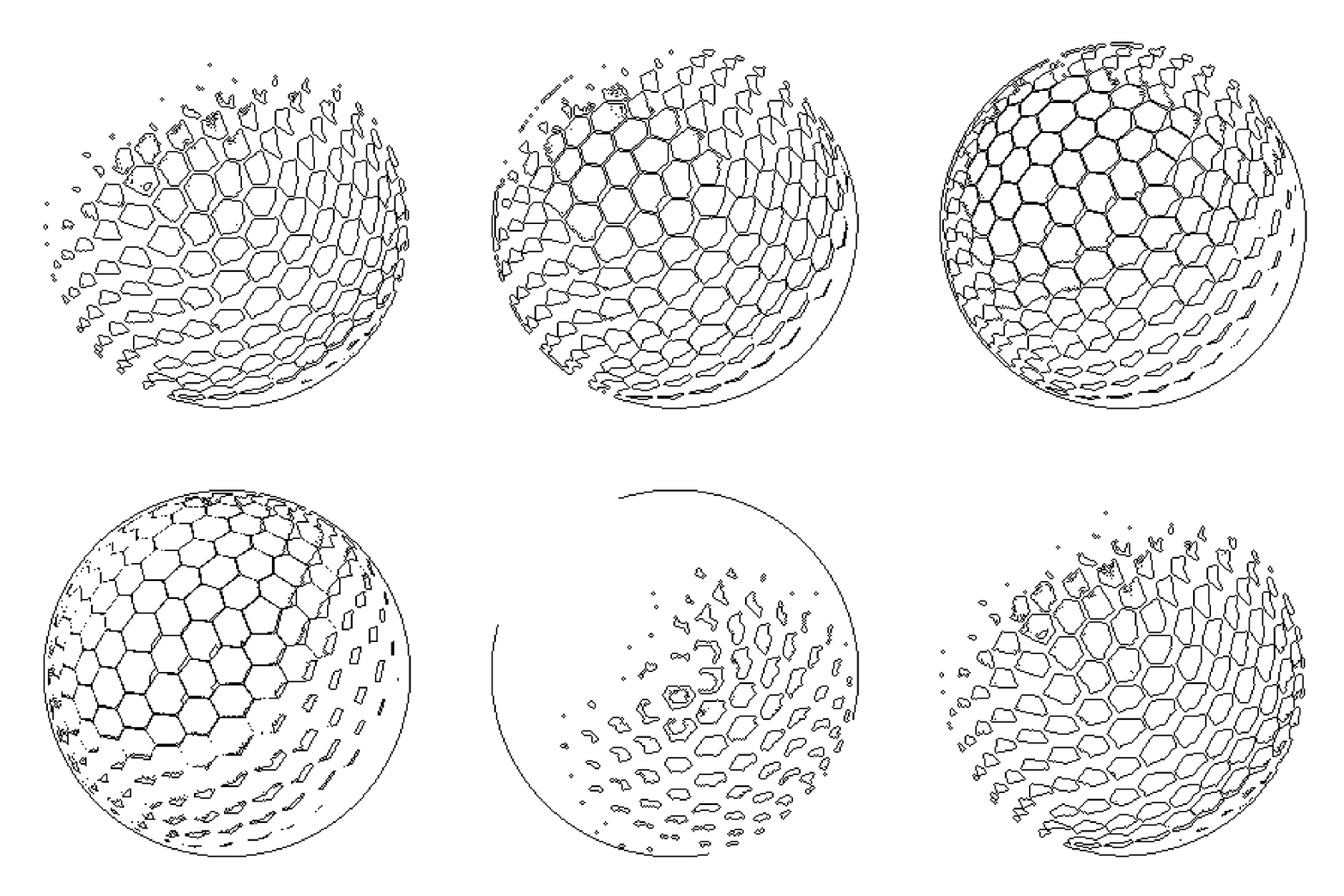
With your solid work and career as an artist, what influences have contributed to your development most?
A/ I think the list is very long and goes beyond the simple visual arts. We are constantly immersed in a culture that is enriched day by day. I grew up mainly with my little brother between the countryside and TV as my only company. Cinema and cartoons came to build an identity and dreams long before my discovery of contemporary art. If I really had to make a tiny list of Contemporary artists whose work I always look at with attention, I would say these must be part of it (but I am surely forgetting many others): Bridget Riley, Lynda Bengliss, François Morellet, Mike Kelley, Richard Deacon, Vera Molnar, Frank Stella, Wim Delvoye...
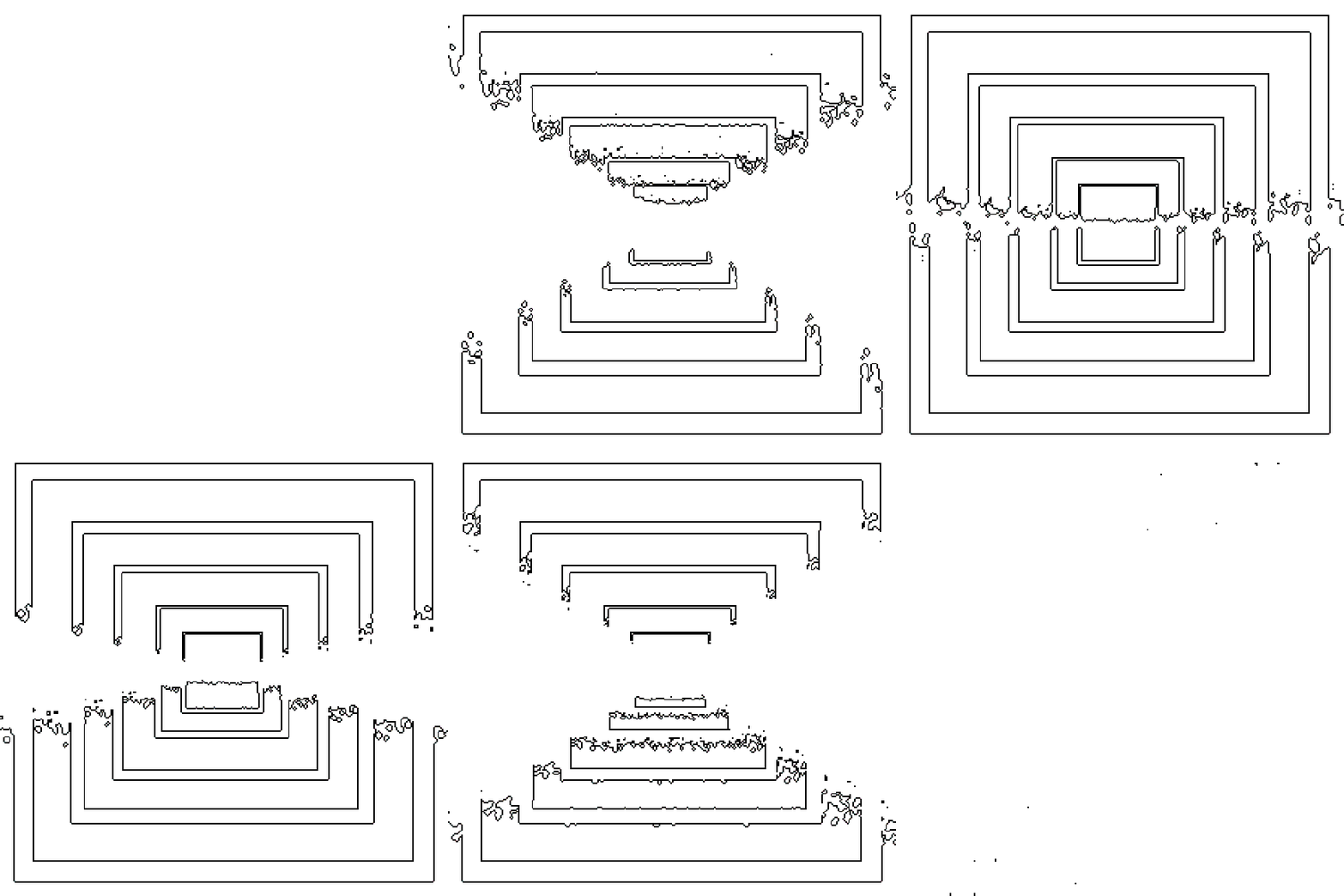
What future progress do you anticipate in your work, and how are you preparing for them?
A/ Iam in the process of preparing a new solo exhibition in the gallery which represents my (physical) work in Lyon (France) for next September.
There will obviously be a video, my brother will produce the soundtrack (he is a musician). There is therefore already this new element which is added and superimposed in an exhibition context. A series of new paintings where I will focus on working this white area in my compositions. Very hard to take a photo of, but which invites the viewer to spend time on each proposition to discover all its secrets. And finally, some sculptures if all goes well. Recently I'm taking a lot of pleasure in bringing out shapes directly from animations, also working frame by frame.
I think the videos will be central pieces of the exhibition. I'm mixing different recipes for the occasion.
Regarding NFTs, I will continue as much as possible during this period. With potentially collaborations or special editions for one-off events for example. I quite like these opportunities which bring a lot to an artist in the dialogue or upstream during the research phase. It's always an opportunity to do things you didn't think of and get out of your comfort zone.
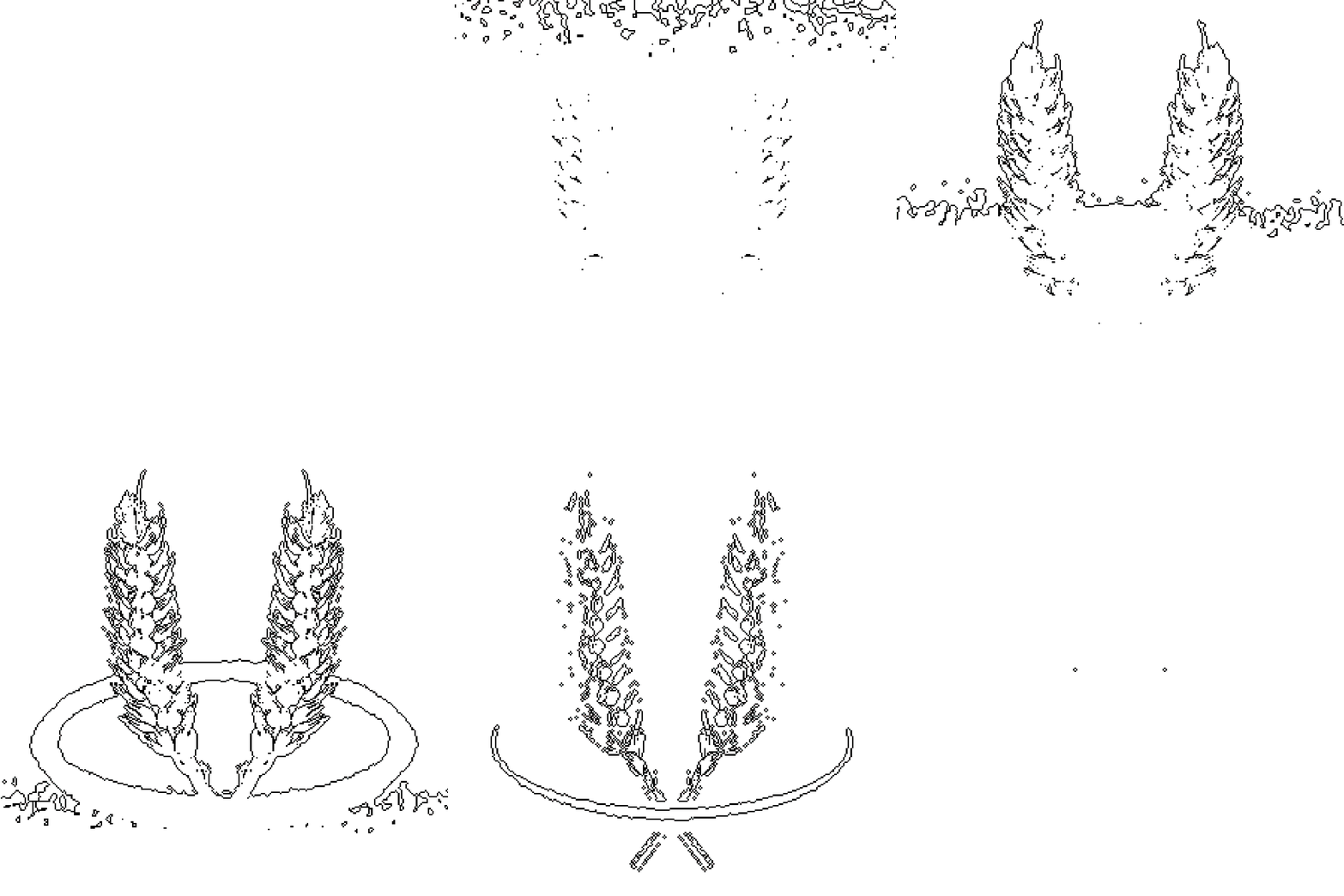
ARTIST @AllavenaJerome
INTERVIEW Francoise Gamma
ACCOMPART'S© — Computer Art Auction House ©