

Kirill Ukolov’s artwork, “Confluence du Côte du Rhone et du Pastis,” was featured in the second ACCA “Digital Nostalgia” auction.
Born in Moscow in 1979, Kirill has lived and worked in France since 2005. He graduated from the Toulouse Higher Fine Arts School in 2010 and the Moscow State University of Printing Arts in 2000. Sculpture and site-specific installation are at the heart of Kirill's artistic practice. He began creating NFTs in 2021, believing in blockchain and convinced that the NFT technology is the future of the art.
Kirill Ukolov's "Confluence du Côte du Rhone et du Pastis" artwork was featured in the second Accompart's "Digital Nostalgia" auction. The artwork is on display at the Accompart's Auction House and the Gallery.
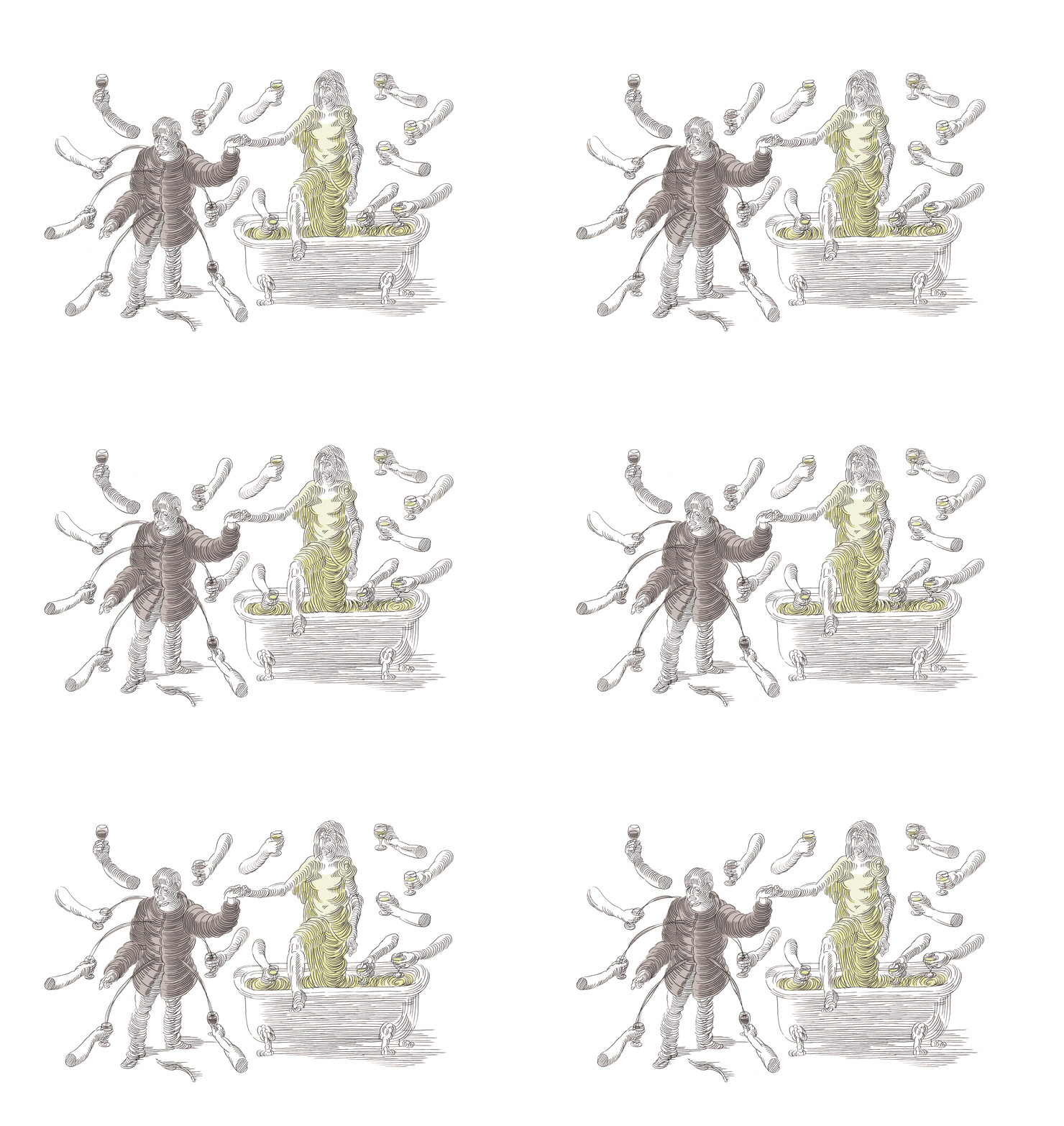 “Confluence du Côte du Rhone et du Pastis”
Your artistic practice often revolves around the "poetry of the ordinary." Could you share specific experiences or influences that led you to find inspiration in everyday objects and situations?
Art is a means to communicate briefly about things that would take too many words to be explained. To me, the better way to make art is not to define or describe but to provide an unexpected personal experience. It is surprising because no frame warns that "art is here." Personal because when you drink a glass of water, you're not a bus driver or an art critic; you're just a thirsty human. It's both personal and universal; it is essential. Working with everyday objects allows me to integrate my work into reality better, to weave it into its texture.
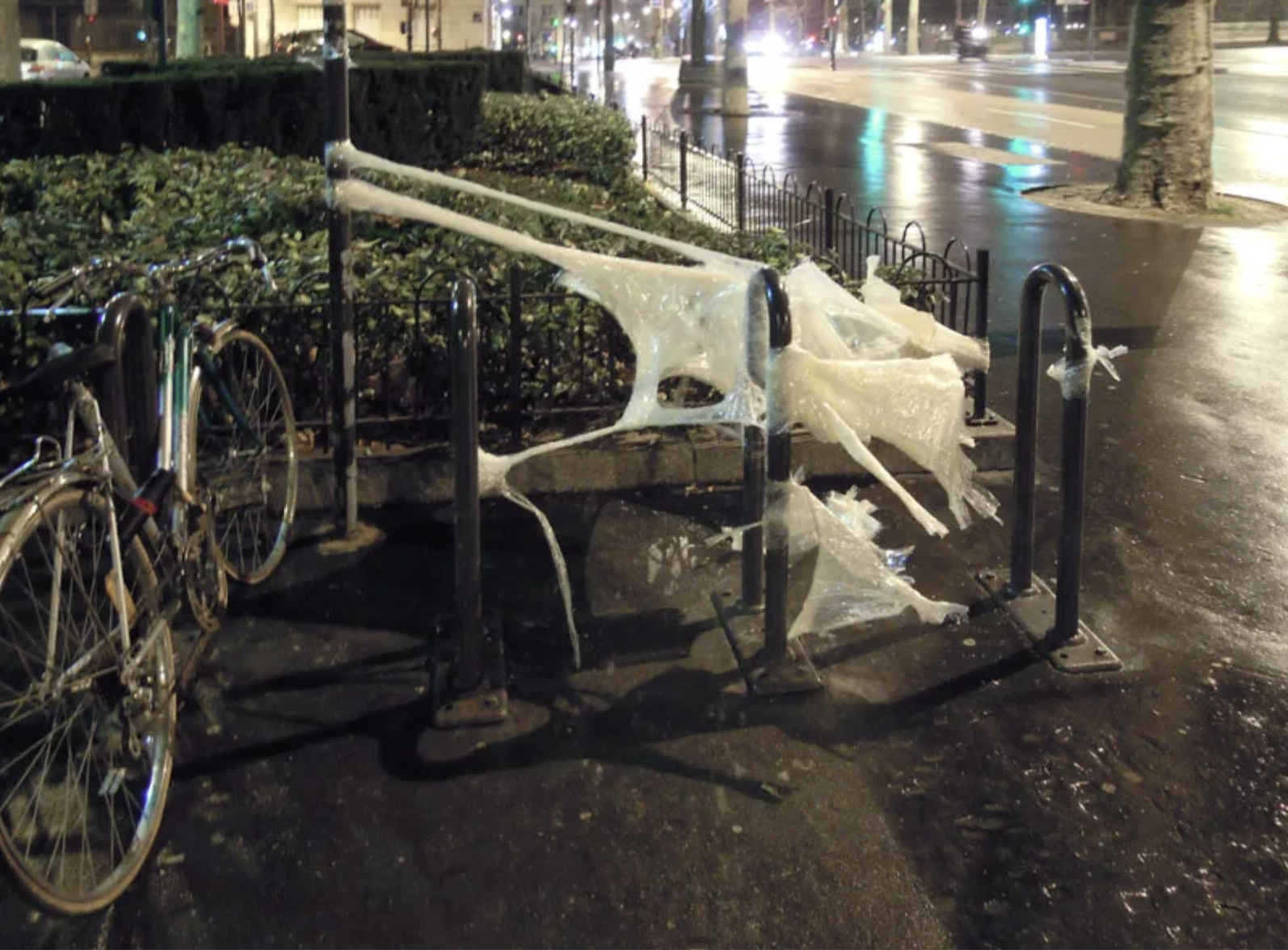
When I arrived in Paris a few years ago, I wasn't sure I would stay for long. I felt in movement, trying to anchor myself for a period I didn't know how long. I lived in the heart of the old city in a tourist area where the stones were old, and the people were passing through. My first artwork here was a kind of sacrifice to the local divinities. I bought a brand new bicycle that I tied up in the street with a lot of tape. Rolling up the tape reflected my desire to get to know a new place and make connections here. However, I knew my goal was doubtful because adhesive tape could not replace a steel padlock. Surprised by its shape and absurdity, people passing by took photos of my sculpture. It stood there for two days before someone realized he could cut the tape and take the bike away.
Which artists and specific works have played a pivotal role in shaping and influencing your artistic practice?
It's an artwork by Stéphane Thidet called The Shelter, a little wooden house installed indoors in an exhibition space. Inside is a table, a lamp, a few utensils, and a few stacks of books. This little house recalls childhood and summer vacations. And it's raining from the ceiling. This simple artistic act of making the rain fall inside a house built indoors creates a particular mental space, keeping memories inside the installation the way heat is kept inside a greenhouse. It's a real machine for producing nostalgia.
This art experience and this work's relationship to form, material, and object significantly influenced my work.
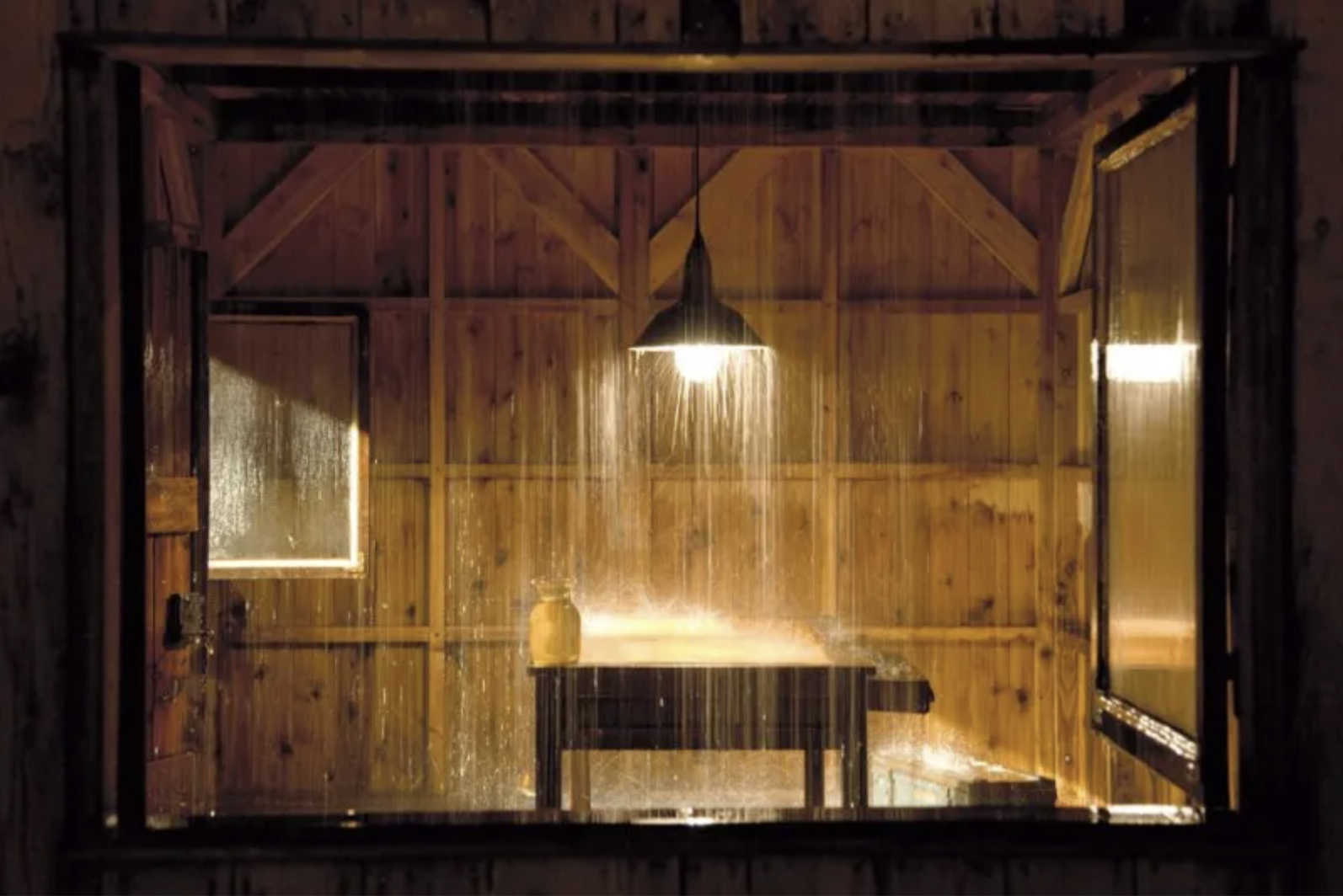 https://www.stephanethidet.com/Sans-titre-Le-Refuge
Your journey includes a transition from traditional sculpture to creating NFTs in 2021. How has this shift influenced your creative process, and what potential do you see for the NFT format in the future of the art?
NFT allows me to quickly bring my projects to life without spending much money on production. In the form of NFT, I sketch out the works I would like to make one day in physical space but already have a life of their own as slightly animated images. I'm convinced that the most complete forms of visual art are, coincidentally, the most ephemeral. By this, I mean site-specific installations and events. The NFT is the best way to fund these practices by selling sketches before the physical event and photographic documentation afterward.
How does the cultural context of your country of origin impact and shape the expression of your artistic vision?
The most significant impact of my Russian background is my deep interest in European culture and history. I'm fascinated by these old stones shaped by previous generations and time. As a foreigner, I can truly appreciate the beauty of this country and its phenomenal cultural heritage. Over the past two decades, I've seen that the French, at least in the cultural sphere, criticize and detest their ancestors, values, and way of life. This state of mind is probably linked to Christian guilt, to the doctrine of Original sin. I hope it will lead to the renewal of the West rather than its final decline.
Could you provide insight into the conceptual framework behind your artwork "Confluence du Côte du Rhone et du Pastis," featured in the "Digital Nostalgia" Auction and currently on display at the ACCA Gallery? What inspired this piece, and how does it encapsulate the essence of your artistic vision?
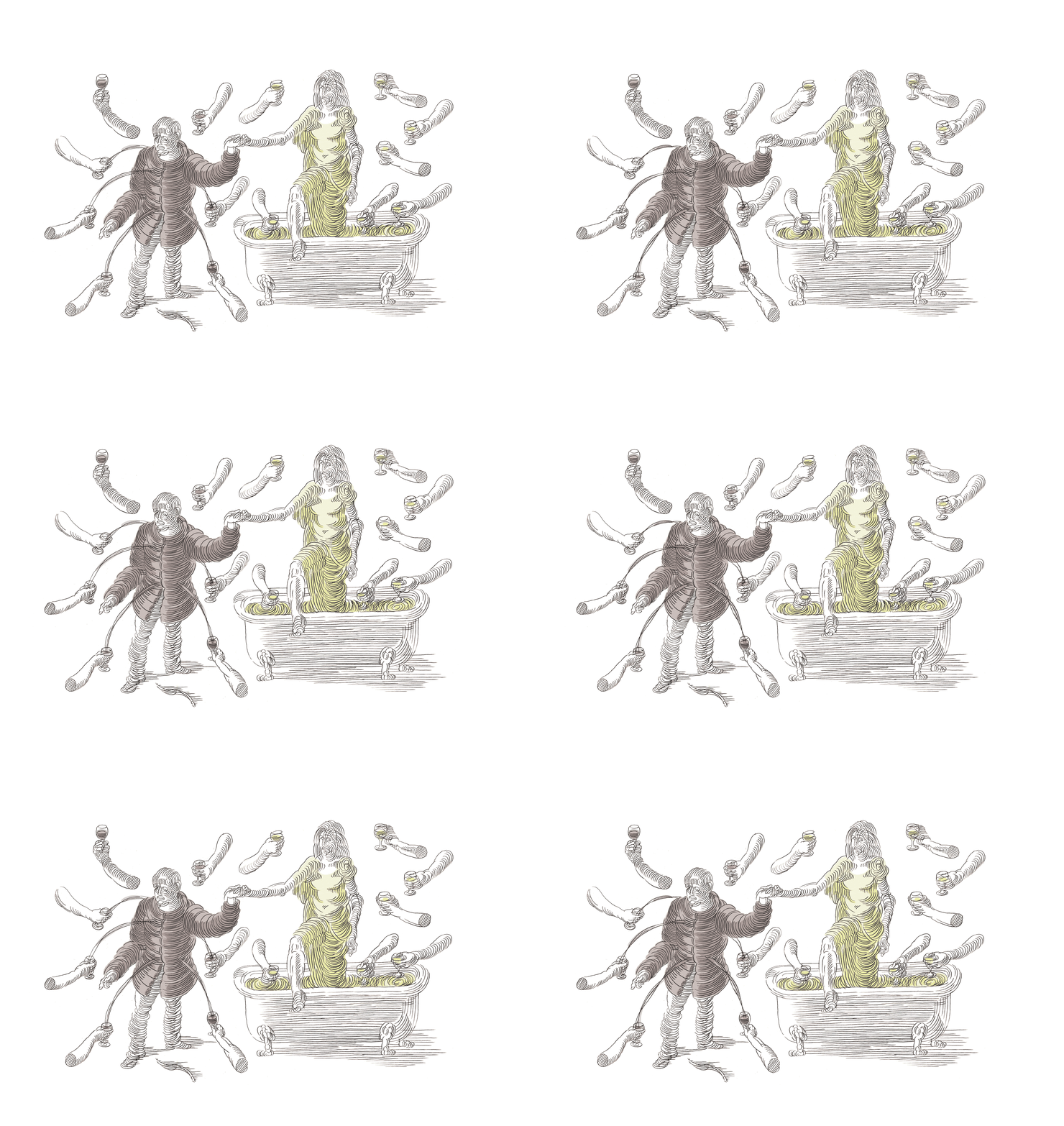
It's a project for an event that is both a celebration and an ephemeral work of art. The protagonists are inspired by two friends of mine, Laurent and Chloé, who like to organize parties and are very good at it.
The male character is dressed in a coat that looks like a down jacket. It is made of transparent plastic film and filled inside with red wine. Côte du Rhône is a major wine-growing region in France. At the party, you can take a knife and pierce his coat so you can pour yourself a glass of wine. It expresses the masculine essence of facing danger and paying for joy and well-being with blood.
The female character is wearing a dress soaked in pastis. People say that prisoners' wives in Marseille used to bring them towels soaked in pastis and dried in the sun. Their criminal husbands could drink their favorite beverages by putting them in the water. At the party, the girl lies down in the bath, and when she gets out, the tub is filled with pastis for everyone to drink. It's the feminine essence that brings happiness simply by being there.
A drawing illustrates the concept. But one day, I'll make a few wine-filled transparent coats and put a nice bathtub full of pastis next to them for my friends!
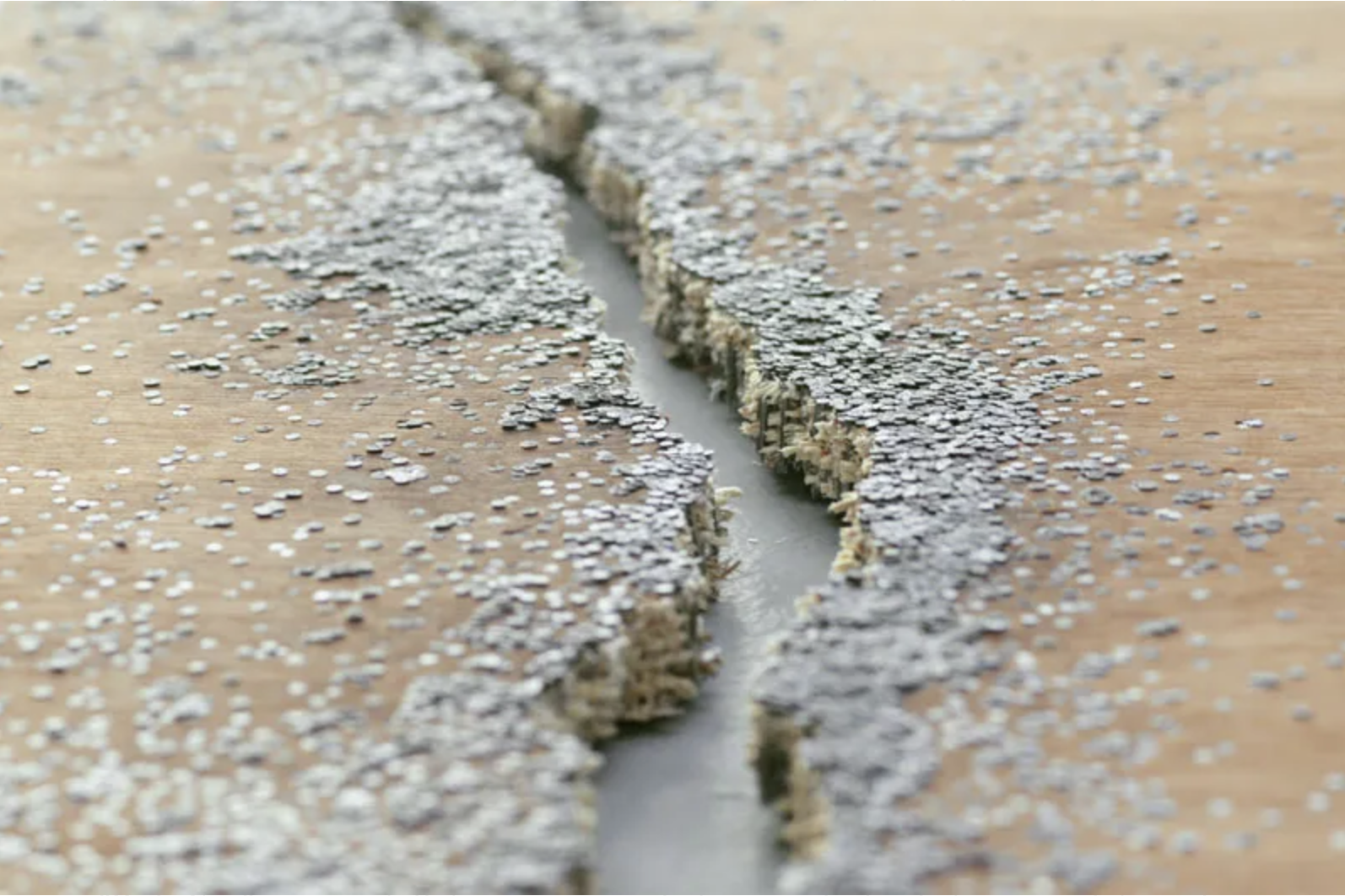
Your artistic path is often described using geological terms like "break," "slip," and "rupture." How do these terms reflect your approach to art, and what role does the concept of starting anew play in your creative process?
Thank you. You noticed something I had never thought about before.
I think there are two types of artists: those who always follow the same personal direction (AC/DC, for example) and those who try different things (David Bowie). I like both, but I feel closer to David Bowie's method. Ideally, every new project should be new, i.e., original and surprising, at least because it doesn't look like the previous one. This artist's credo contradicts the market's nature. People like things they are used to.
I've often destroyed my work at the end of an exhibition. Because it was an installation created for a particular place, or even because a sculpture was unsold, and its transport and storage were as expensive as creating a new work. Fortunately, blockchain keeps everything!
As we embrace the festive spirit of Christmas and approach the onset of the new year, what artistic endeavors and plans do you have in store for 2024?
Most of all, I'm going to make NFTs. The GIFs I make are the fastest way to complete a project until I can bring it to life in physical space. When I get ideas out of my head, I get new ones coming. It is essential for me to have new ideas.
Also, I will participate in a group show in Paris in April. Two of my works, "Only You" and "Flow," will be displayed.
"Only You" is an installation composed of a round, slowly turning plate and a double-sided mirror. Two lovers or friends step onto the rotating plate, taking the mirror in their hands. A loop from the song "Only You" (remixed) plays while the couple turns in a slow dance. They can buy as NFT the looped video of their dance afterward.
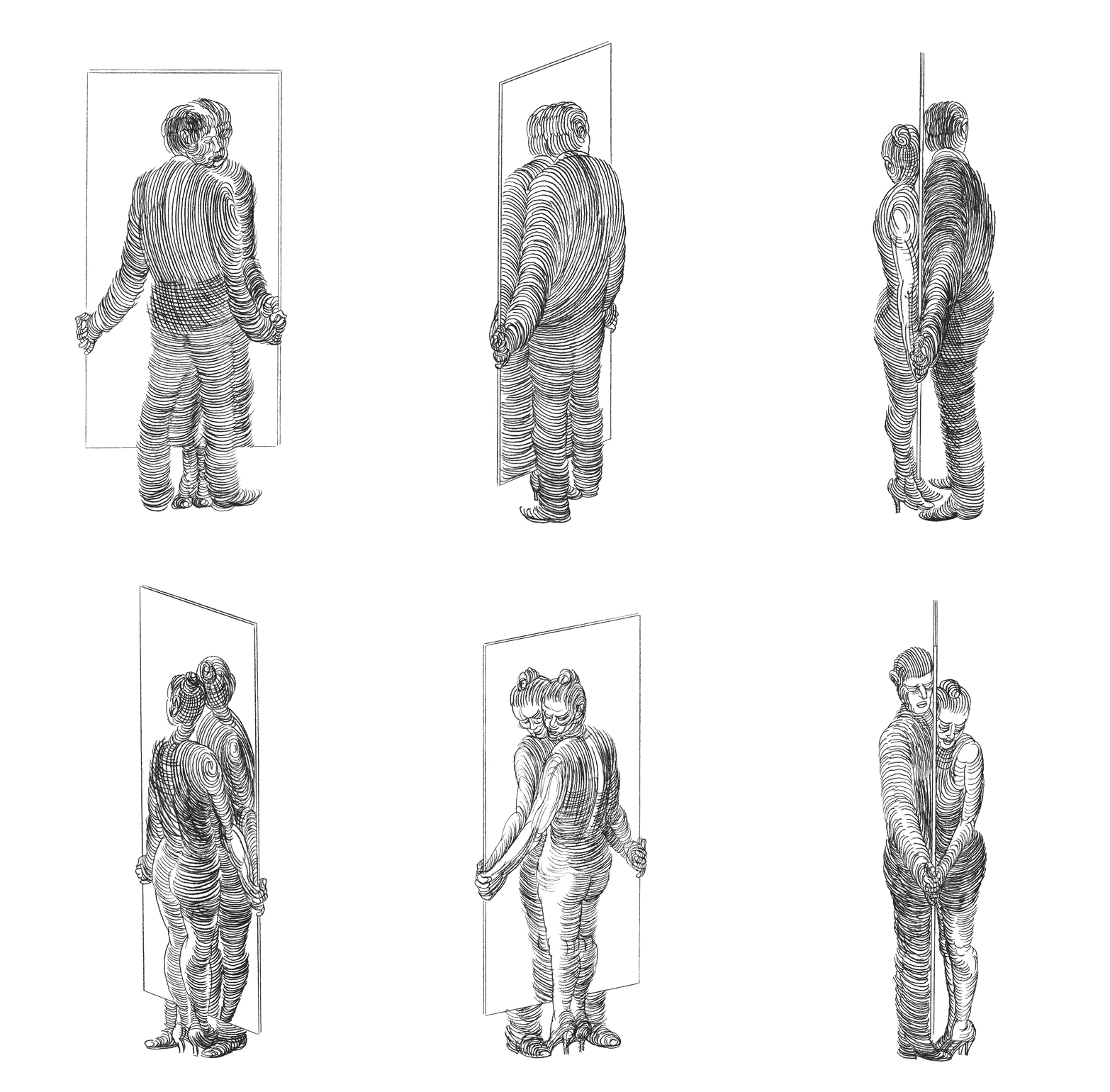
This project was born of an observation. I saw a girl in the subway carrying a mirror almost her size. It was funny because she was hugging her reflection. I thought of all those girls I cross in the street and in public places that attract my eye, call me, make my head turn. I thought about the nature of desire and relationships. These profound exchanges transform us. The desire for a new encounter is to change oneself, to become another version of oneself.This narcissistic element seems to be an inherent part of love.
"Flow" is a sculpture of two poles you can see in airports and other public places designed to manage people's flow. The poles are linked by a long blue strap that creates a puddle, almost a sea on the floor. I like the dialectical principle of the unity of opposing extremes. This work is about alternating periods of order and chaos in human society.
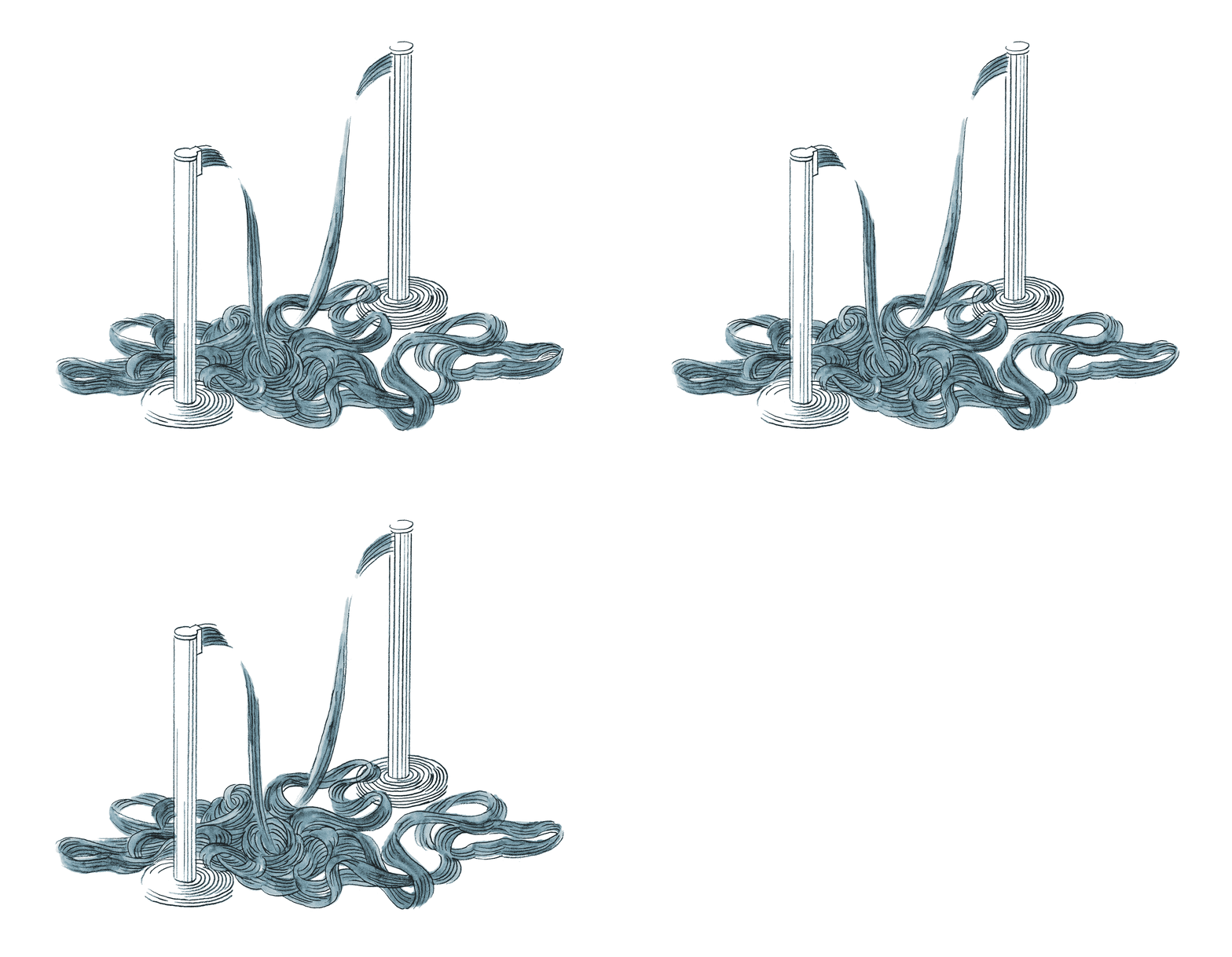 “Flow”