

Marcel Muntyanu: A Journey Through Aesthetics and Art for Art’s Sake
Marcel Muntyanu, a LA-based artist, redefines digital art by exploring aesthetics over meaning. From novels to digital readymades, his work traverses surrealism, beauty, and personal narratives.
 Marcel Muntyanu
Marcel Muntyanu artist based in Los Angeles. He explores new forms of art, focusing on artificial creation methods and the conceptual interaction between digital objects. Marcel is dedicated to developing new forms of aesthetics, often prioritizing aesthetic appeal over meaning in his digital works and novels. His practice encompasses digital readymade, fairy tales, surrealism, and the concept of art for art's sake.
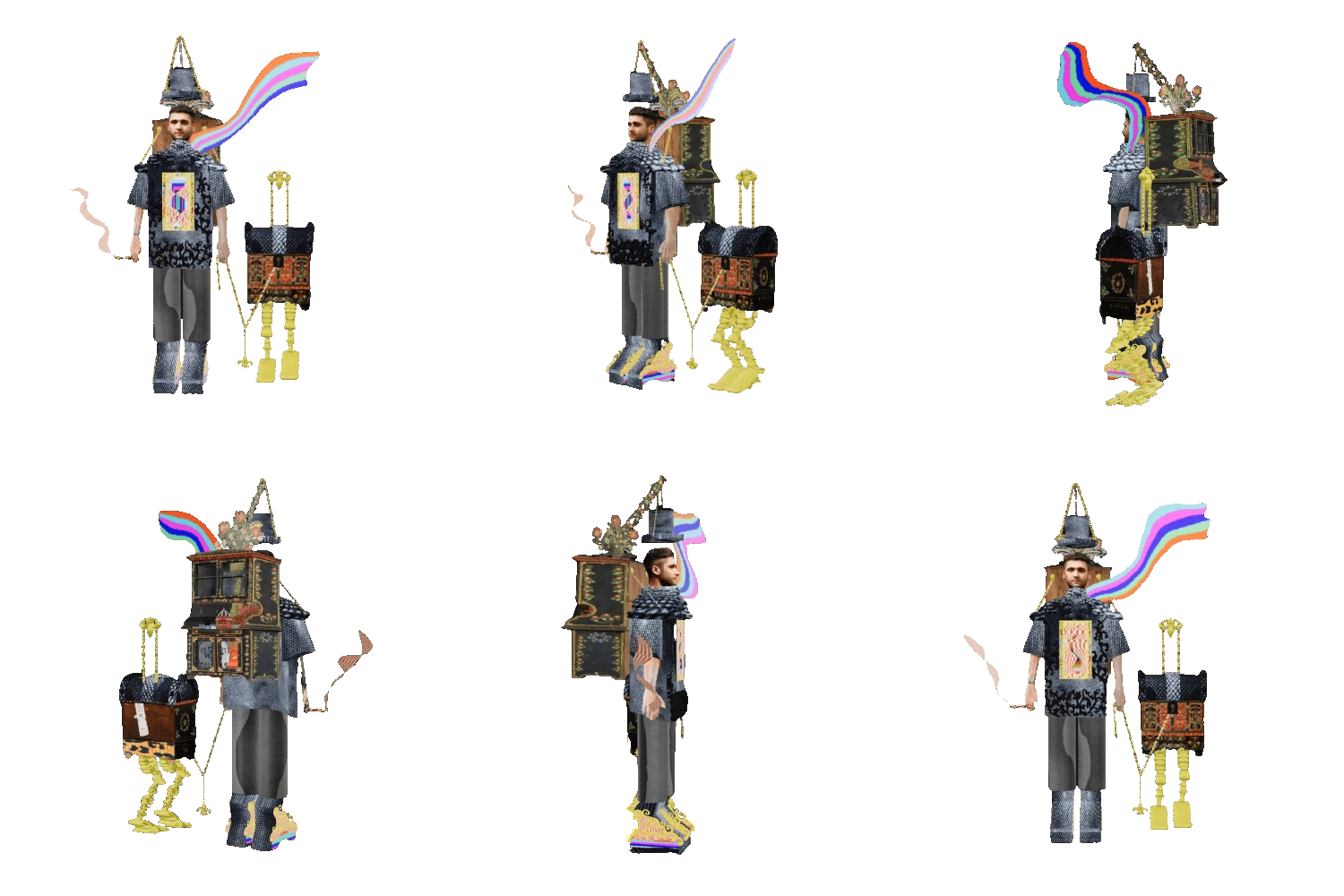
Interview for the ACCOMPART’S
Do you remember the first time you encountered art?
A/ That moment in my childhood when I saw the boundary of the rain. I was so amazed, and it couldn’t fit in my head that something as "formless" as rain could have such clear physical boundaries. Until then, I had only encountered something like that in the fairy tales I was so fond of reading as a child. Now I realize that much of what I create in my works draws on the aesthetics of fairy tales and folklore.
That moment in my childhood when I saw the boundary of the rain.
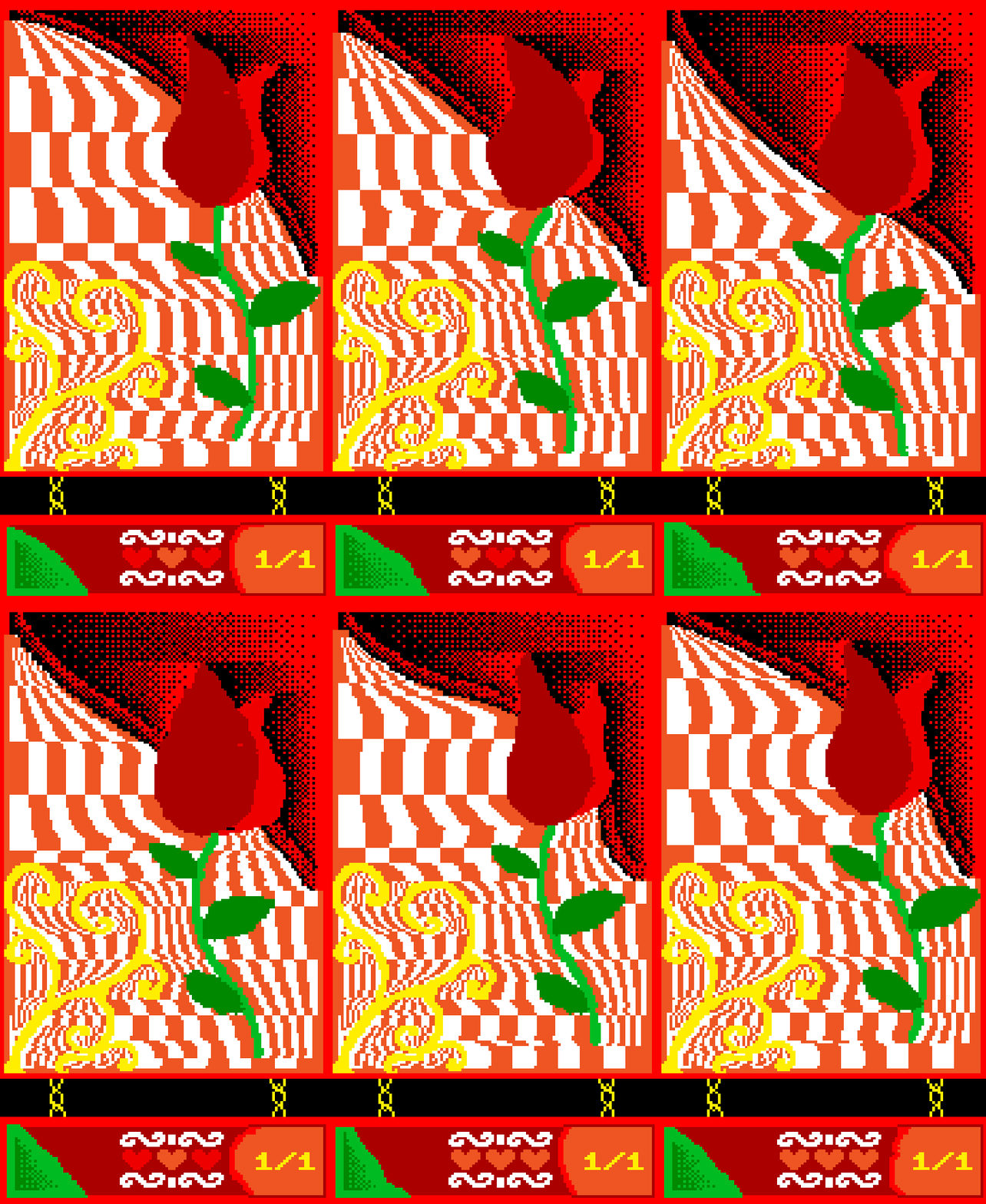
What was your first experience creating art?
A/ I enjoyed writing small fairytale surreal stories with unexpected endings. I even won a few contests in city newspapers, or, for example, once my teacher yelled at me in front of the whole class, accusing me of having copied a story I had written from somewhere else. But that was back when I didn’t even have the internet.
I also had many strange habits that, I think, deeply influenced my love for art.
For instance, I still keep a bag of numbered lighters that I used during my university years. For each lighter, I have notes about the event that happened when the gas in it ran out because I loved the symbolism of that moment. It all started when I didn’t even smoke but liked lighting cigarettes for friends at parties. It began as some silly joke but eventually fascinated me — turning it into an endless spectacle. Has it ever seemed to you that when you light a cigarette, the moment feels underlined, like a favorite quote in a book?
Later, I began collecting sunshowers, noting their dates and counting them. And I also got deeply into collecting sunrises spent with friends. This time, I took the collecting "more seriously," creating separate pages for it on social media and tagging those who were there in those moments. This grew into a collection of miniatures about the “heroes of sunrises” because, during those moments, everything around was filled with a sense of magic, as if we were lucky enough to encounter miracles.
I still keep a bag of numbered lighters that I used during my university years. For each lighter, I have notes about the event that happened when the gas in it ran out because I loved the symbolism of that moment.
Why did you start doing digital art?
A/ During my university years, I had this unbearable FOMO about how much what we were doing made sense simply for its own sake and nothing more. It seemed to me like a kind of theatrical art for our big group of friends. As if all we cared about was being cool and working on our personalities, which would eventually get worn down by life, but somehow, later.
Those were the times when benches, damp from the autumn drizzle, somewhere in the middle of the city, became places where you could spend the whole day with friends and random passersby. My biggest fear was missing out on such unique moments—either to add them to my book or simply to remember them. So for all those six years, I had an unshakable habit of noting down every funny joke, phrase, invented word, amusing incident, crazy antic, sweet and touching moment.
Those were the times when benches, damp from the autumn drizzle, somewhere in the middle of the city, became places where you could spend the whole day with friends and random passersby.
I did it in a special way, with short phrases, signing the name of the person who said or did it. Later, my friends and I would open these notes and, sitting somewhere in a park, read them together, remembering all the funny moments from our trips to the sea, parties, festivals, or just someone’s birthdays and New Year’s Eves. These notes were called “Names” because the names of people who were with me, even briefly during a journey, influenced me. I always dedicated the novels I wrote to those special people who inspired me the most during those periods of light, carefree beauty.
I prepared for sunrises even more carefully. Every time, I wrote a few new miniatures or abstract fairytales, and then, somewhere on the seashore, as we greeted the sunrise, we would take turns reading these little sketches. I tried to make them sound personal, different for everyone, painting beautiful pictures in their imagination. For me, it was a whole world of tales under the sunrises with friends.
It felt like words themselves were treated differently back then. They were overflowing with frosted tenderness. We treated words as art, and there was an unrealistic, naive beauty in that. That’s why I was afraid of losing these moments, and the habit of writing everything down stayed with me for six long years.
So yes, in many ways, I was shaped by the special forms of interaction with people who were important to me and whose uniqueness felt like art. Even in the way someone smoked a cigarette, I saw art. I even joked that some people didn’t need to do art because art was the way they lived their lives.
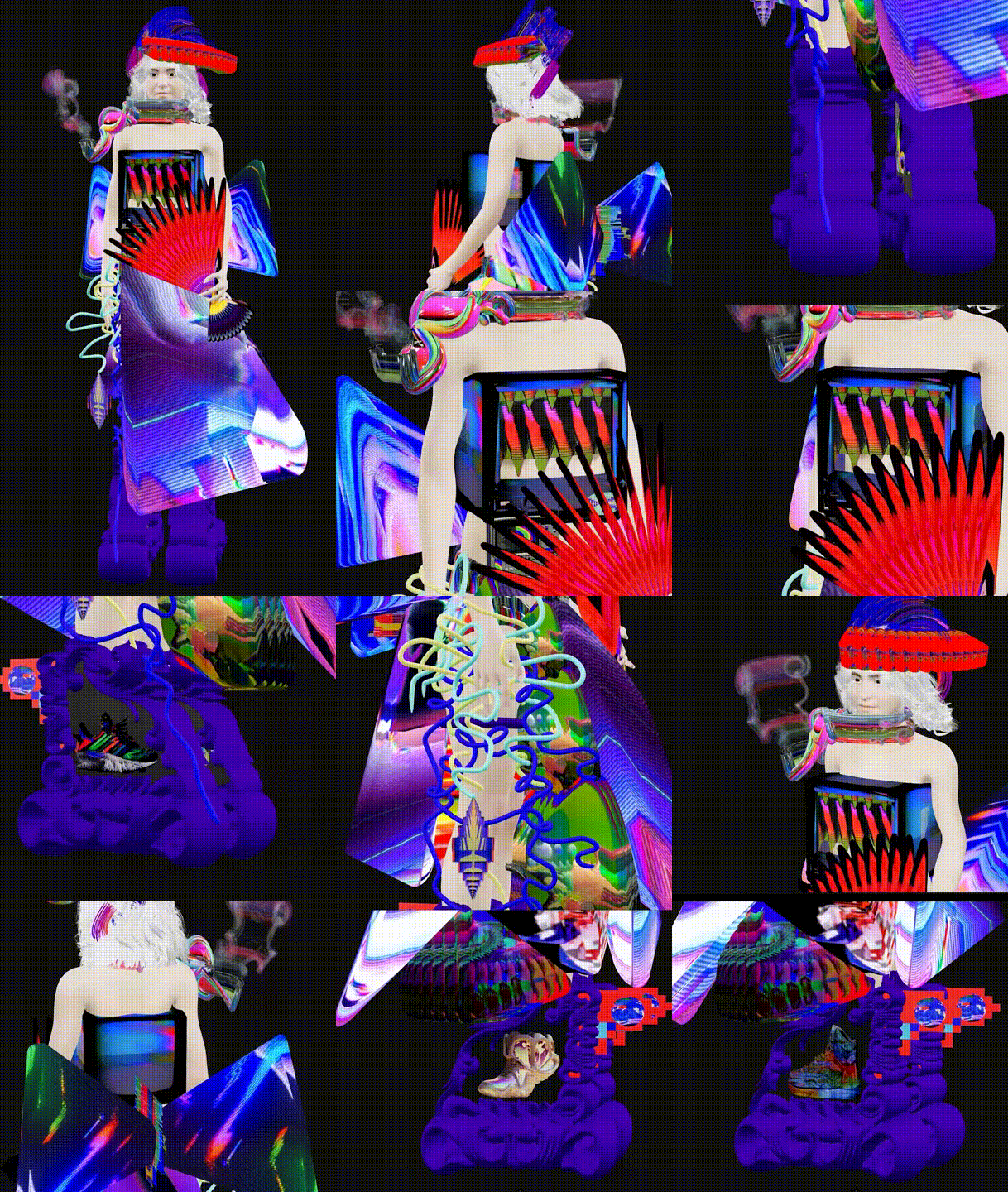
And this, in many ways, is why I started, as I now realize, creating a collab fashion collection where I transform the works of my favorite artists into fashion, and the models are MetaHumans of the real artists who are dear to my heart. It’s such a delightful process for me, and I’m so glad I started it.
By making this collection, I feel like I’m doing what I loved so much back then—immersing myself in the inner world of an artist and their art and creating something special from it, gifting it to us as a memory, just like I did with collecting moments and writing down everything that happened with each of my dear friends.
some people didn’t need to do art because art was the way they lived their lives.
Why did it all come to an end?
A/ I have always been deeply concerned with the feeling of how much we change within ourselves. With each major period, I would recall my former self as if thinking of another person. But for me, there is something tragically tender about forgetting those past selves. This is exactly why I began writing novels — to capture those glances, smiles, names, thoughts, and actions that would never happen again. And with every book, I buried my past self.
It seems to me that people don’t die physically as often as we die within ourselves, becoming someone else.
But it is very hard for me to recall all of it, especially that version of myself. Because, despite my efforts to remain pragmatic and my understanding that life cannot always carry that particular flavor of “as if any moment now, we’ll discover something new,” as if, even though we know dragons no longer exist, there are still doors in the real world that could be opened, and something would happen.
Then came the coronavirus, and right after it, the war — life under rockets every day, until gradually everyone started scattering across the world to entirely different points on the planet. No matter how romantic we may be, life eventually took from us what it always intended.
That strange feeling I experienced after living a year during the war, when rocket sirens wailed several times daily, and sometimes missiles struck the homes of neighbors — this feeling stripped me of the fear of death. But it also took from all of us the sense of familiarity, comfort, and the feeling that you have a home.
When you wander the world for several years, trying to find a new home, you adapt strongly to the fleetingness of everything, and because of that, it’s as if you stop feeling the presence of meaning in what’s happening.
But I didn’t want to lose heart. And I noticed that the only thing left, the only thing guiding me, was the search for beauty, for aesthetics. A search even in places where I had not seen beauty before. Aesthetics have brought me, through this long journey, to Los Angeles, where for the first time, I begin to feel I have a chance to build new meanings in these years when everything was erased. For the first time, I am in a place that brings tears to my eyes from its beauty.
I noticed that the only thing left, the only thing guiding me, was the search for beauty, for aesthetics.
And I am grateful to aesthetics for replacing meaning for me all this time, for guiding me and giving me a purpose — the search for beauty, which kept me from losing heart and allowed me to continue searching.
So, when I was offered to create an exhibition, I wanted to explore the theme of aesthetics prevailing over meaning, as it was this mindset that helped me find the right direction during a challenging period in my life.
You mentioned that you started your journey with writing novels and later became deeply fascinated by digital art. Is there an overarching goal, or are these just hobbies?
A/ My greatest passion is the desire to create a new form of art. Books provide the most powerful tool for this, for me, at this moment — a format where I can practice it. Because only there do I have complete freedom to artificially create conditions for the theoretical emergence of new types of art, as well as to adjust reality to fit the kind of art that is impossible in this one.
My greatest passion is the desire to create a new form of art.
But to understand what actually becomes a new type of art, why, how it works, and what happens between us when we discuss art, I would like to explore and dive deeper into the most important components of this process — the creation of a new genre and a new aesthetic.
And now I have grown to love sensory tools, which were previously unavailable to me in literature and lie at the core of digital art, to such an extent that they have become one of the most important parts of my life.
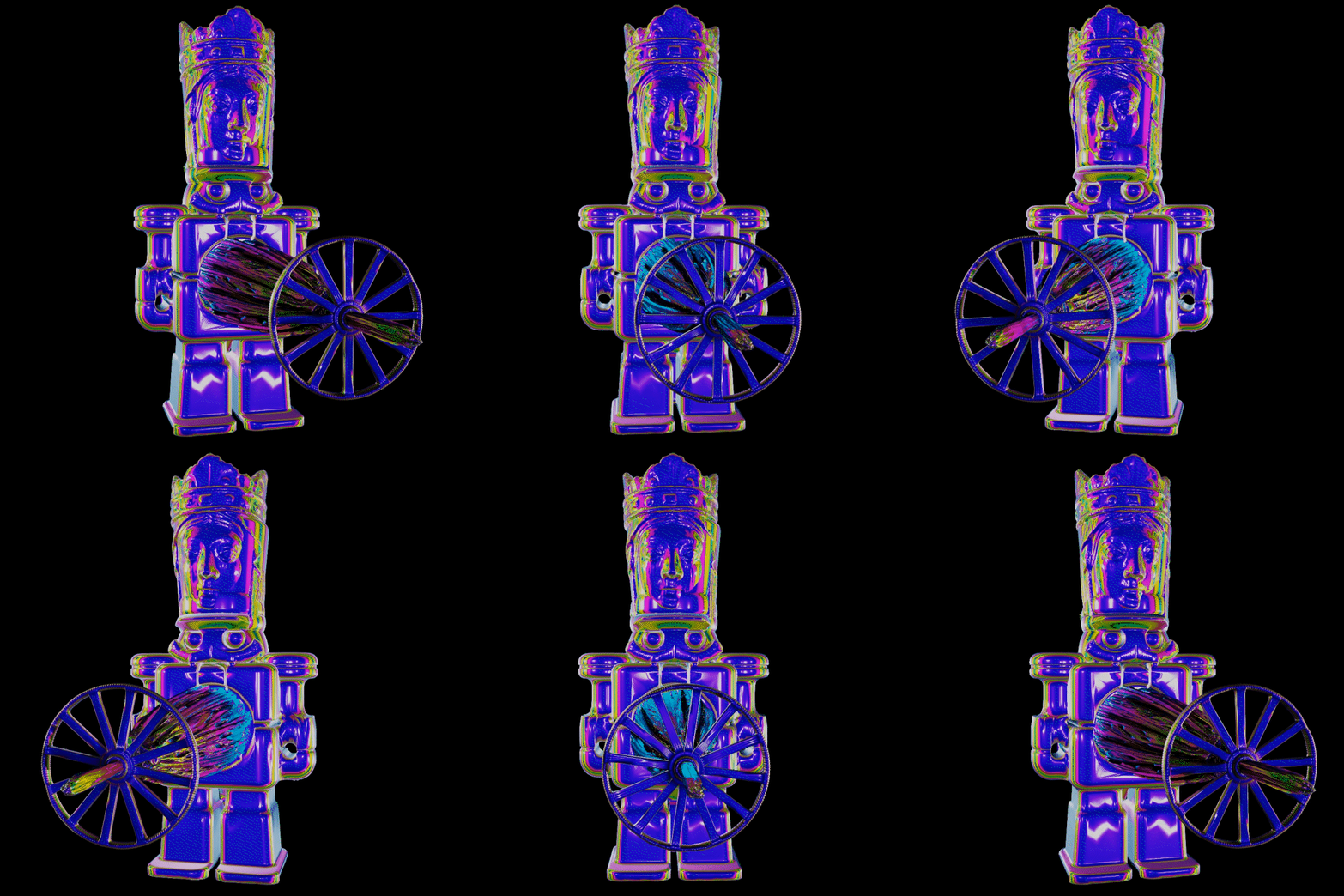
I have decided to separate, for myself, the themes of exploration and techniques in these types of art. Therefore, in digital art, I devote my attention entirely to aesthetics and to the artists I love.
In digital art, I devote my attention entirely to aesthetics and to the artists I love.
Artist and curator OnlyAesthetic Digital Art Auction Marcel Muntyanu / @marcelmuntyanu
Interview @YNKAdigital
ACCOMPART'S© — Computer Art Auction House ©