

Through Digital Art, Web3, and NFTs with @UnknownCo123
Exploring the motivations, philosophies, and curatorial endeavors while shaping the digital art landscape.
Can you share a bit about the person behind the @UnknownCollector alias? What motivations, experiences, or philosophies hide behind your engagement with digital art, Web3, and NFTs?
A/ My fascination with art and collecting started indirectly. As a teenager, I spent hours in local shops, pouring over rap CDs and uncovering music beyond mainstream reach. This was pre-Spotify, a time when such discoveries were real adventures. I was captivated by the lyrics, their structure, and nuances that seemed only meaningful to me. University life and the rise of MP3s and streaming services dimmed this passion, but the transformation was significant. It wasn’t about owning CDs; it was the journey they sparked in me. This mirrors my experience with digital art and NFTs. I didn’t have contact with visual arts ever really before, but got obsessed fast. Initially, I collected fervently, but soon, possession mattered less than the paths of learning the involvement with art unveiled. The space’s boundlessness excites me.Visual Art is an endless exploration of self and the world, and in the blockchain era, this combination of tech and art offers countless learning opportunities daily.
Through my background in psychology I’m focusing a lot on artists’ struggles in an era of hyper financialization of art. It's just so complex and contra intuitive how creating and selling art in such an environment have to co-exist. But it also brings great possibilities for artists of course. Additionally, I’m intrigued by how mainstream engagement with art possibly can enhance mental health and self-expression. I believe it paves the way for broader creative experiences.
Could you discuss your recent curations with objkt.one and tell us more about your featured exhibition with Foundation titled 'Beyond the Hype: Into the Unknown'?
A/ Most of my curations and work in digital art boil down to one thing: supporting artists whom I find outstanding but who do not get the attention they deserve.I try to be their voice, build my reach, and spread their message and art as far as I can. In my objkt.one exhibition, I wanted to draw more eyes to the playful yet profound digitally crafted naïve art in our space. The weirdness and rule-breaking nature of this genre make it one of the most fascinating for me. In my Foundation exhibition, I focused on showcasing great pieces from my personal collection and deliberately chose not to feature the more famous works or artists, but rather those who deserve to be on the same pedestal but are still not.
What initially drew you to the digital art world, and how has your vision evolved since you began curating digital galleries / artists?
A/ With digital art, I essentially discovered contemporary art—something that immediately captured my attention. My journey began when I tried to buy an NFT for a friend's birthday and realized the high cost of minting one. This experience sent me down the rabbit hole of understanding why people would pay so much for gas and why NFTs are revolutionary. I never looked back and soon shifted my focus solely to art after discovering Foundation. Over time, my vision has evolved significantly. After engaging with the Tezos art scene, I realized the transformative potential of digital art, and that perhaps I was initially fascinated by works that aren't as captivating as I once thought. I started learning about art from scratch, beginning at zero on a long and never-ending, yet fulfilling and fun journey. My curating career began after my friend Kika Nicola encouraged me to apply for objkt.one. She guided me on where to dig deeper and what effective curation entails, leading to my acceptance. I’m still very proud of that exhibition because it focused on digital naïve art—a genre not yet mainstream but always remarkable to me. I naturally have an eye for art, but currently, I’m focused on substantiating this intuition. That’s my focus now.
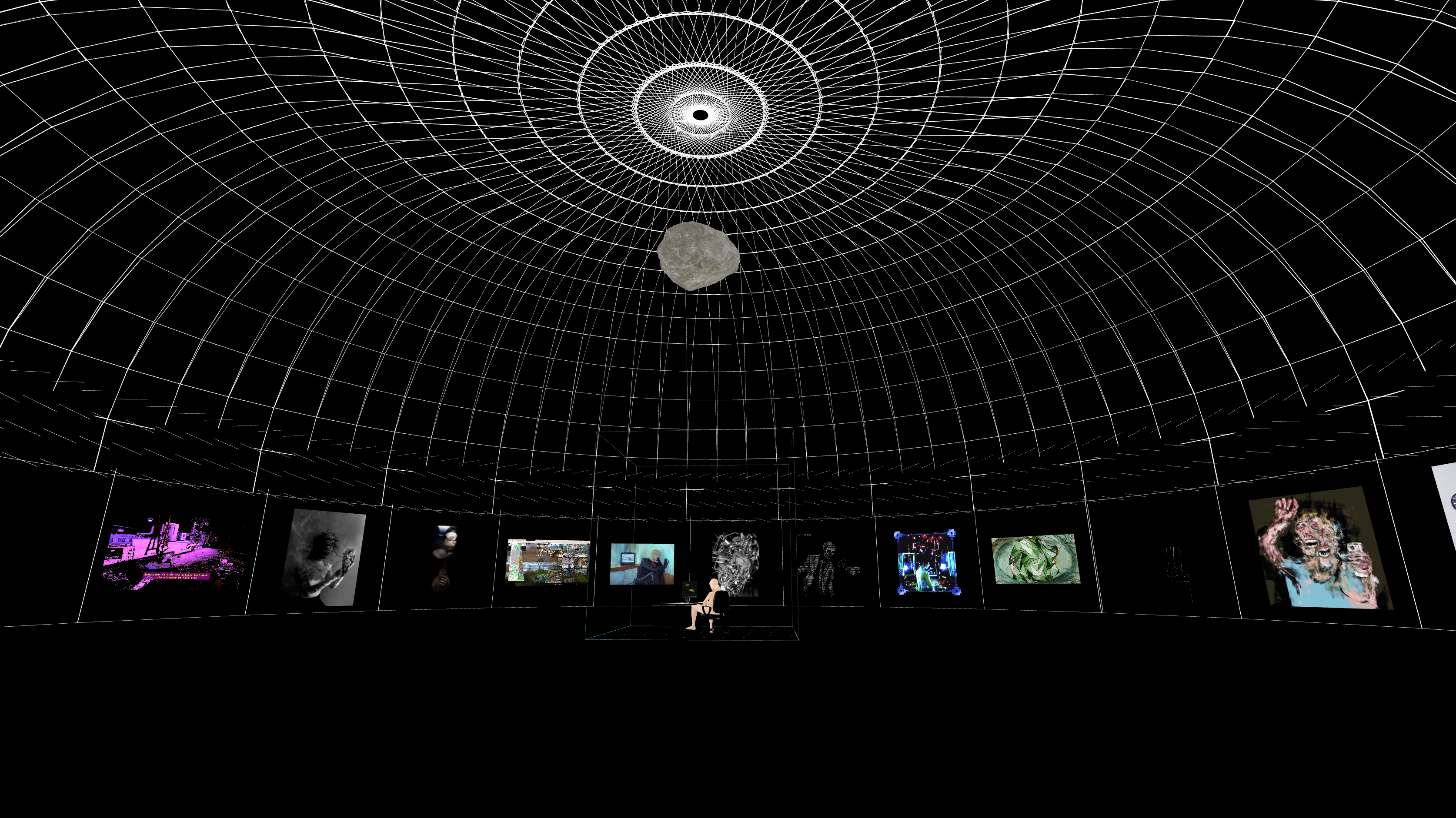
For the upcoming 'Echo Chambers' Digital Art Auction that you're curating, the goal is to redefine how we perceive digital identity. Could you share more about the philosophy guiding your curation?
A/ I’m always drawn to psychological themes, and visual art is a way to perceive and showcase those themes beyond words. It’s a great complement to all the literature out there, adding much to our understanding of phenomena like manic phases, among others. As we navigate a unique phase of the world shifting towards digital life, the consequences of which we can't fully grasp, digital art uniquely captures the new feelings we experience. This is especially true as I choose artists who create works that can’t be fully explained but are instead absorbed by the mind observing them. I feel understood without needing words to describe these feelings, and I prefer not to search for words but to simply enjoy the connection with these pieces.
What is the common thread that brings together the diverse artists featured in the 'Echo Chambers' Digital Art Auction?
A/ Their natural way of seeing the world differently through their art is evident; each artist possesses a magical talent—and, of course, a passion for refining their craft—to reveal aspects of the world beyond what we typically perceive in everyday life. They all approach this in a slightly more melancholic, heavy way. For me, all of their art aligns perfectly with the theme of echo chambers, a concept that weighs heavily on our society and is likely to grow in significance. Consequently, I chose to focus on the dangers of echo chambers rather than their possibilities, steering away from artists who create nostalgic, fun, or happy art.
Transitioning curation from an art-exclusive practice to a daily necessity is fascinating. What are the main challenges you face in curating not just art but information in the Web3 space?
A/ Of course, the biggest hurdle that will never change is the incomplete information available. With art, there may be ample information, but it's still too much for a human to fully grasp and consider in their curations. This often leaves me feeling incomplete or like an imposter because I can never meet my own expectations. However, this feeling also motivates me to never stop learning and to continuously broaden the range of knowledge and factors I incorporate into the curation process. Daily information curation is even more daunting because it’s endless and runs you over like a speeding train when you engage with social media, web3, or the internet in general. It’s inherently overwhelming, and if you don’t manage it well, you will be inundated with information that can be detrimental to your mental health and skew your view of the world because it is often flawed and one-sided. Thinking about why and how you use the internet today is the first step to developing a healthy relationship with it. When you know what kind of information you are searching for, you start to consider what’s necessary for a balanced view. For me, curation is always about thoughtfulness. If I approach it with intent, I’m satisfied with the outcome, despite any flaws.
Given the growing influence of AI in art creation and curation, how do you differentiate between authenticity and artificiality in digital artworks?
A/ First of all, I believe that much of the art created with AI is authentic and has opened up new avenues for many great artists to discover something breathtaking and fresh. I’m deeply involved with written and visual AI, which enables me to discern whether someone is using raw words or images. Combined with my experience of viewing thousands of works of art over the years, I can subconsciously differentiate what’s worth exploring and where the artist significantly influences both visually and conceptually. It always boils down to studying an artist's body of work to understand their origins, vision, and artistic voice.
There are also artists who use raw AI but have found their niche and curate it exceptionally well to truly express what they have always wanted to say. Using raw images can be a statement, but most of the time, it’s not.Now, it's even more crucial to distinguish between artists and creators. Because while everyone can be a creator now, not everyone is an artist.
Guest @UnknownCo123
Interview @YNKAdigital
ACCOMPART'S© — Computer Art Auction House ©